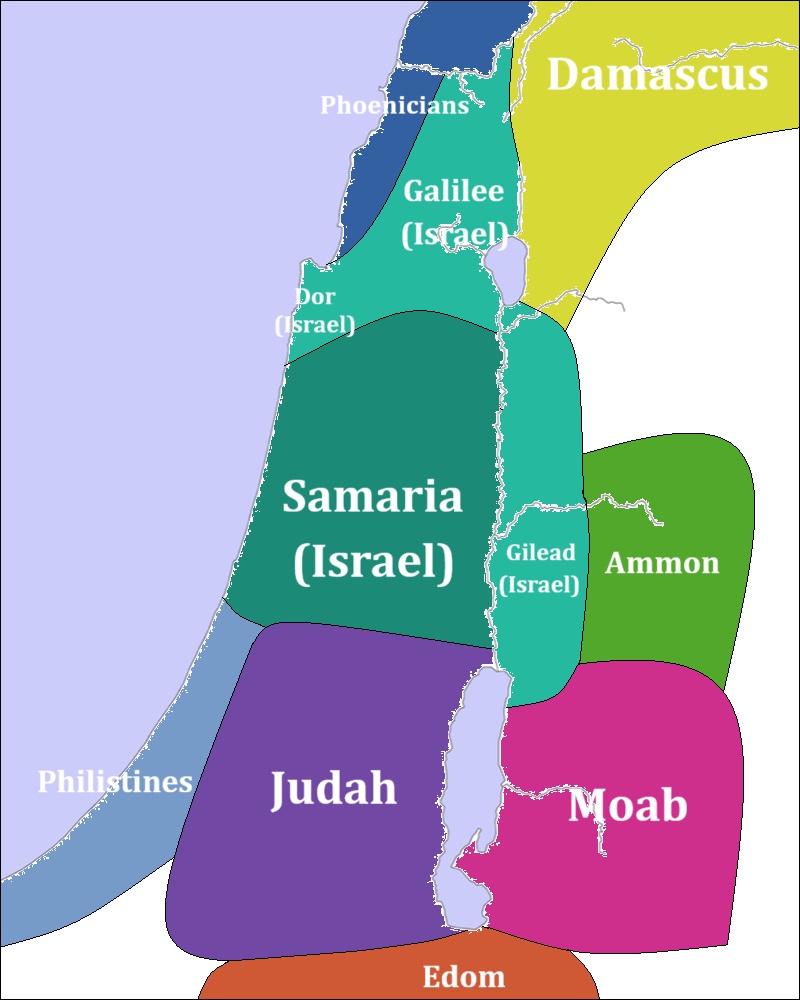
By Daan Nijssen (CC BY 3.0)
When studying Assyrian imperialism, one encounters a striking paradox: the phenomenon is unusually well documented, yet unusually difficult to view from any other perspective than an Assyrian one. Royal inscriptions describe military campaigns and diplomatic exchanges in considerable detail, but they do so through the highly ideological voice of the Assyrian king. Sources produced by the kingdoms confronted with Assyrian imperial ambitions, by contrast, are far scarcer. This makes the biblical book of 2 Kings exceptionally valuable: it preserves something we rarely possess for the Neo-Assyrian period: a sustained account of how smaller states actually dealt with Assyrian power.
Its value lies especially in the practical details. The text shows rulers paying tribute, building alliances, invoking external support, and choosing between resistance or accommodation, as well as the domestic political struggles that could shape those decisions. These are precisely the kinds of processes that Assyrian royal inscriptions tend to reduce to formulaic categories such as loyalty, submission and rebellion.
Read alongside the Assyrian evidence and through an international-relations lens, 2 Kings therefore offers a rare opportunity to examine imperialism as an interactive political process: not simply as the advance of an overwhelmingly powerful empire imposing its will, but as the product of repeated encounters between Assyria and local actors pursuing their own strategies of survival and autonomy.
Continue reading “How Israel navigated Assyrian power”