In my previous post, I explored an alternate timeline in which Assyria and Babylonia remained allies rather than descending into centuries of rivalry. I also speculated that, in the long run, Assyria might eventually come to be ruled by an Iranian dynasty, while Babylonia could fall under Arab rule. At first glance, such a scenario may sound implausible. Why would an empire hand power to outsiders? Why would foreign peoples become the military and political elite of states they once served? Yet history shows that this kind of thing happens surprisingly often.
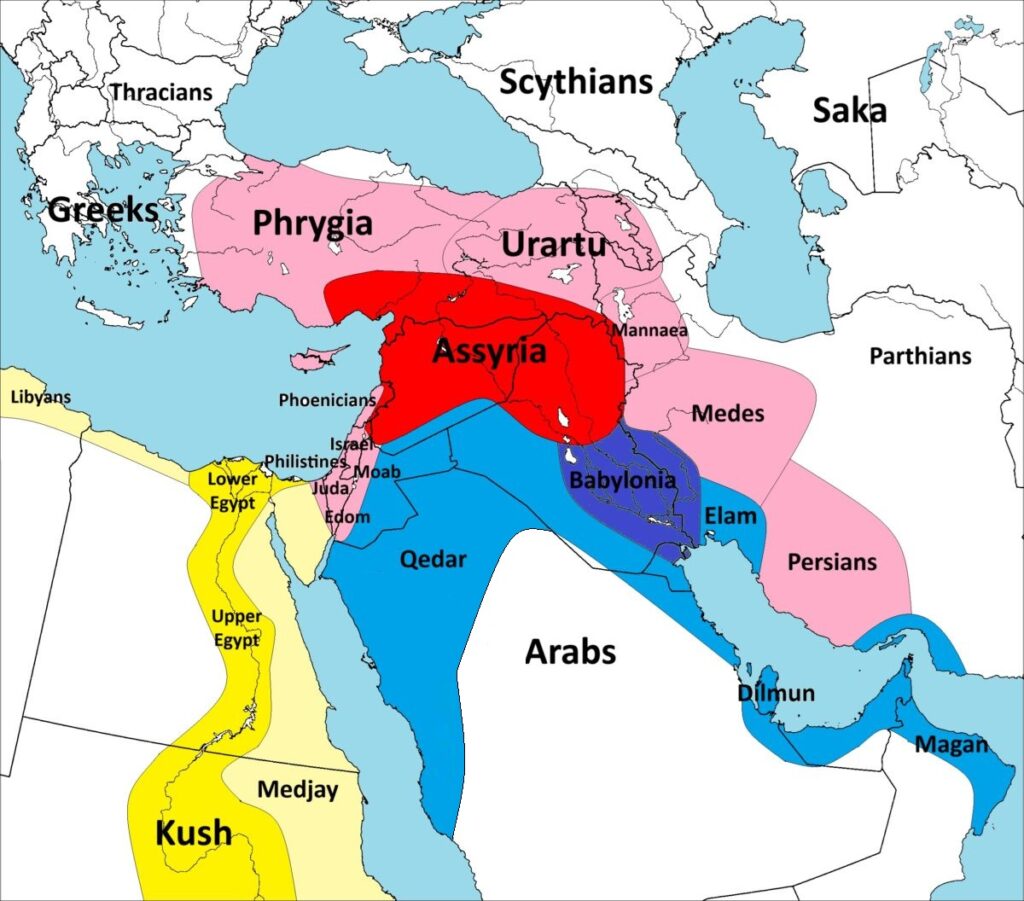
Perhaps the best-known example is the Mamluk Sultanate in Egypt, where Turkic slave soldiers overthrew the ruling Ayyubids and founded a dynasty of their own. Similarly, in the late Roman Empire, Germanic generals evolved from imperial servants into kingmakers, and eventually rulers in their own right. In the Neo-Assyrian Empire, the Medes first appeared as suppliers of horses, later as military auxiliaries, and eventually even as royal bodyguards. During Assyria’s final struggle for survival, the peoples of the Zagros played a crucial role: Mannaean contingents still fought alongside the Assyrians, while the Medes ultimately turned against their former masters. And centuries earlier, the Mitanni kingdom seems to have been dominated by an Indo-Aryan military aristocracy ruling over a predominantly Hurrian population.
These examples differ enormously in scale and context, yet they reveal a recurring historical pattern. Again and again, empires elevated foreign warrior groups into positions of military importance, only for those groups to gradually evolve into political elites, and sometimes even inherit the empire itself.
Continue reading “How empires create their own successors”