A case study in early Neo-Assyrian frontier governance
On Tuesday 24 March 2026, I presented a paper at the Oxford Postgraduate Conference in Assyriology as part of my PhD research. The paper examines the case of king Ammi-Baʾal of Bīt-Zamāni, who emerged as an important ally of the Assyrian king Tukulti-Ninurta II (r. 890–884 BCE). His violent demise early in the reign of Ashurnasirpal II (r. 883–859 BCE) would have far-reaching consequences for the region.
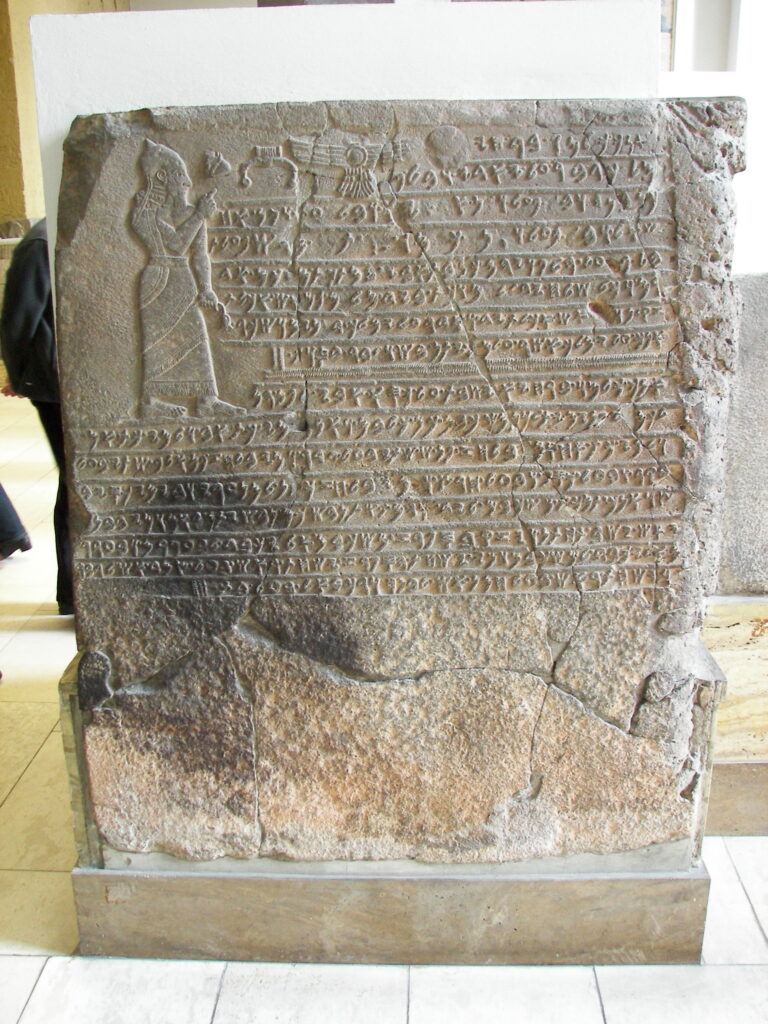
Kilamuwa of Bit Gabbari (Zincirli/Sam’al) standing in front of Mesopotamian deities with an inscription written in an Old Aramaic form of the Phoenician alphabet. Pergamon Museum, CC SA 1.0 http://creativecommons.org/licenses/sa/1.0/, via Wikimedia Commons
In the second half of the ninth century BCE, the political landscape of the Near East was dominated by a single rising power: Assyria. Under kings such as Ashurnasirpal II (r. 883–859 BCE) and Shalmaneser III (r. 858–824 BCE), Assyria had re-established firm control over northern Mesopotamia. The lands east of the Euphrates were effectively under Assyrian authority, either as provinces or as closely supervised client states. From this secure base, Assyrian armies regularly crossed the Euphrates, campaigning across the Levant.
These western regions were politically fragmented. Instead of large territorial kingdoms, the landscape was dotted with small states: Neo-Hittite principalities such as Carchemish, Hamath, and Patina, alongside Aramaean kingdoms like Damascus and Bit-Agusi. Some resisted Assyrian expansion, others chose accommodation, many shifted between the two. Tributary relationships with Assyria became an increasingly common feature of the political order. It was within this environment that the small state of Bit-Gabbari, also known as Ya’diya, centred on the city of Samʾal (modern Zincirli in southern Turkey), emerged as a minor but interesting player.
If you had travelled through northern Mesopotamia in the tenth century BCE, one thing would have stood out immediately: there was no central authority. The region was a political mosaic of small kingdoms, tribal confederations, and local strongmen controlling scattered territories along rivers and steppe margins. None was strong enough to dominate the others for long.
This fragmented landscape emerged in the aftermath of the Late Bronze Age collapse. Until the reign of Tiglath-Pileser I (r. 1114–1076 BCE), these lands had belonged to the Middle Assyrian kingdom. After his death, however, the structures that had once held northern Mesopotamia together gradually unraveled. Fortresses and farming settlements were abandoned, long-distance trade routes became less secure, and Aramaean tribal groups spread across much of the countryside.
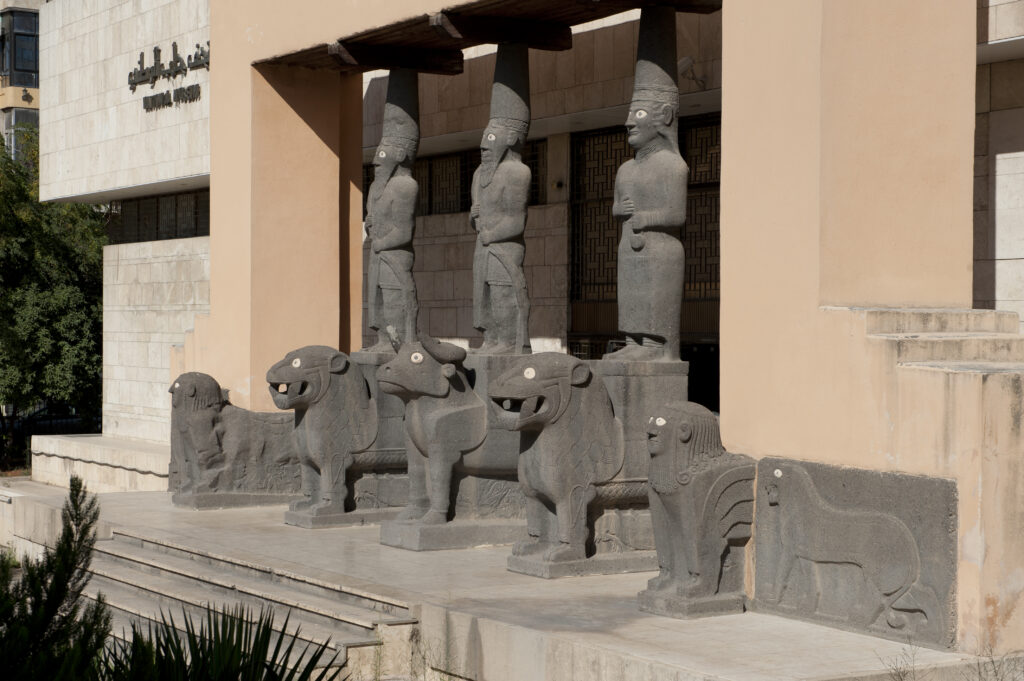
In this environment, power rested largely on kinship and local loyalties. Instead of large territorial states, the region was dominated by smaller dynastic polities centred on ruling families and their followers. One of these was Bīt-Baḫiāni, an Aramaean kingdom along the Ḫābūr River whose capital was Guzana (modern Tell Halaf).
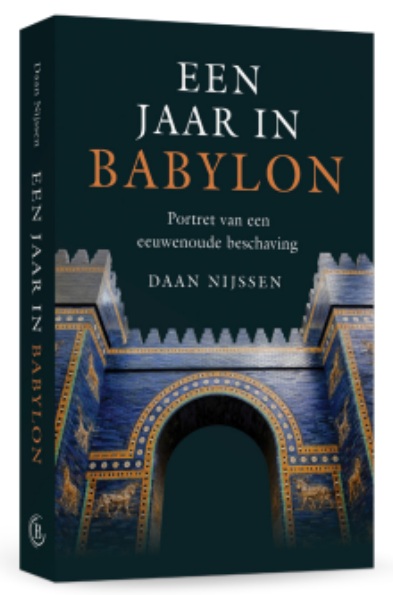
Op donderdag 3 september verschijnt bij Uitgeverij Omniboek mijn nieuwe boek Een jaar in Babylon: portret van een eeuwenoude beschaving. Tijdens de presentatie van de zomeraanbieding op dinsdag 3 maart kreeg ik alvast de gelegenheid om iets over het boek te vertellen. Het gesprek vond plaats in de vorm van een Q&A. De uitgeverij had een aantal vragen voorbereid, die werden aangevuld met vragen van de verkopers die het boek straks bij de boekhandels onder de aandacht brengen.