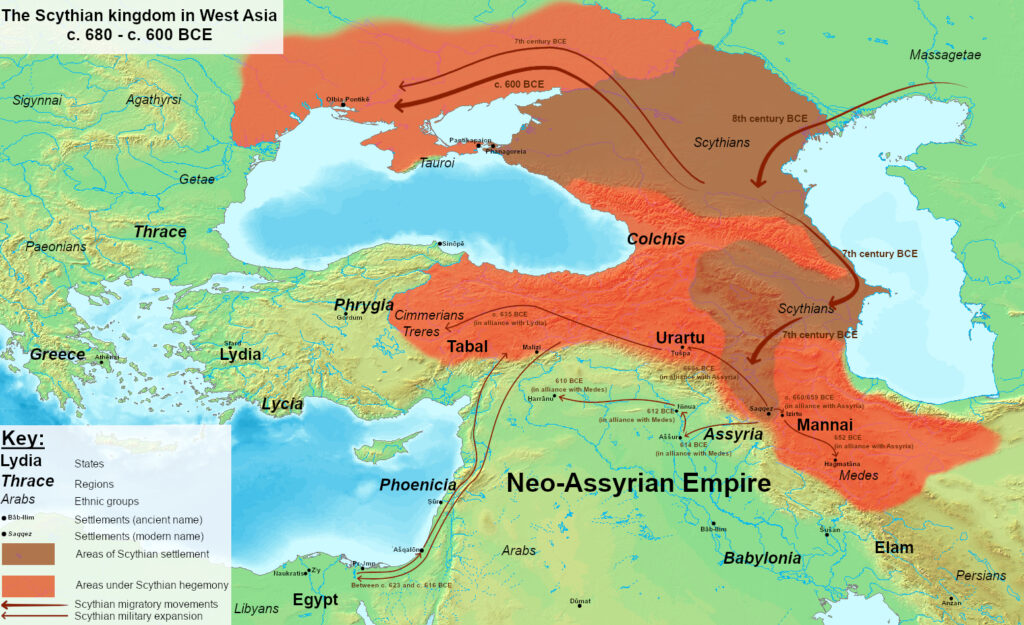
Antiquistik, CC BY-SA 4.0 https://creativecommons.org/licenses/by-sa/4.0, via Wikimedia Commons
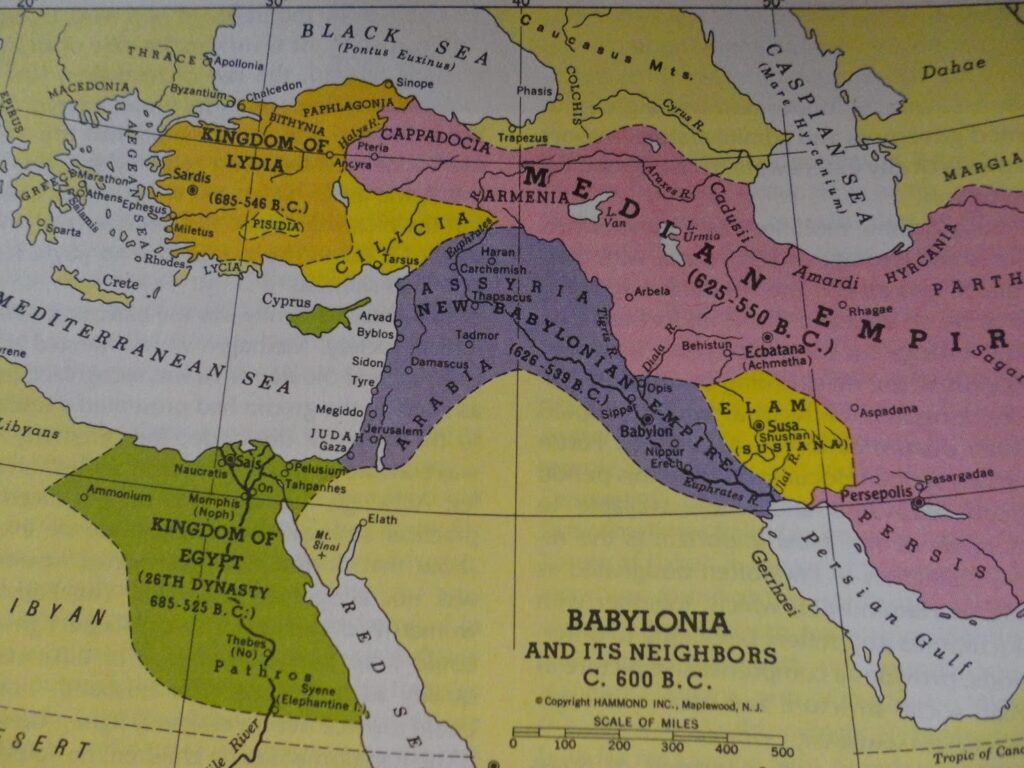
Those familiar with the history of the ancient Near East will have heard of the Assyrian, Babylonian, and Persian Empires. They may also have encountered the debate over the existence of a Median Empire. But was there ever a Scythian Empire? According to the Greek historian Herodotus, there was. In Histories 1.103–106, he describes a Scythian king named Madyes, son of Protothyes, who allegedly ruled over ‘Asia’ for 28 years and led his warriors as far south as Palestine, where the Egyptian pharaoh Psamtik I persuaded him to turn back.
Madyes is also said to have driven back the Median king Cyaxares during his first attempt to besiege Nineveh, the Assyrian capital. The Scythians subsequently subjugated the Medes, imposing tribute while at the same time plundering their territories. After having suffered 28 years of humiliations, Cyaxares invited the Scythian leaders to a banquet, got them drunk, and murdered them, thereby restoring Median supremacy, before fulfilling his original ambition of taking Nineveh.
It is a compelling story, but one that is difficult to reconcile with what we know about this period. Neither Assyrian royal inscriptions and correspondence, Babylonian chronicles, nor the Old Testament mention a Scythian Interregnum, or even widespread Scythian raids across the region, during the latter half of the seventh century BCE.
Continue reading “The Scythian Empire and the limits of speculation”