How the Philistines shaped Iron Age Palestine

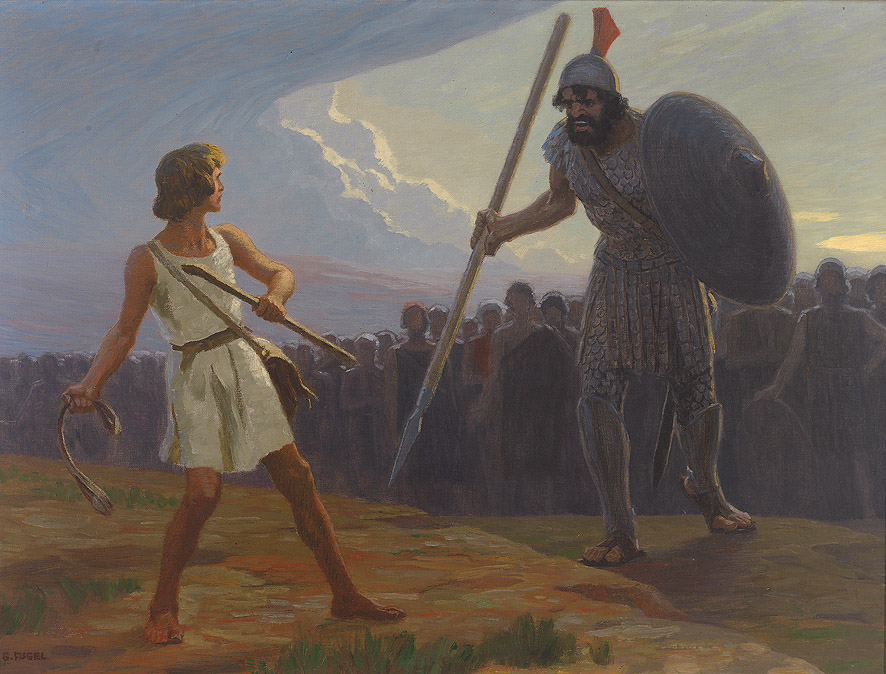
David and Goliath, by Gebhard Fugel (1863–1939)
Public domain, via Wikimedia Commons

Ask someone about the ancient history of Palestine and they will probably mention the Israelites. Ask about the Philistines and most people know only one story: David and Goliath. And some would probably mention Samson as well.

Yet for centuries the Philistines were among the most powerful peoples of the southern Levant. Their cities controlled international trade, negotiated with Assyrian kings and dominated the Mediterranean coast. Long before Jerusalem became famous, Gaza, Ashkelon and Ashdod ranked among the region’s most important urban centres.

Their civilization eventually disappeared. But although the Philistines themselves vanished, they left behind something unexpected: the geographical name by which much of the region would later become known.

Continue reading “How the Philistines shaped Iron Age Palestine”
David, a military entrepreneur who built a kingdom

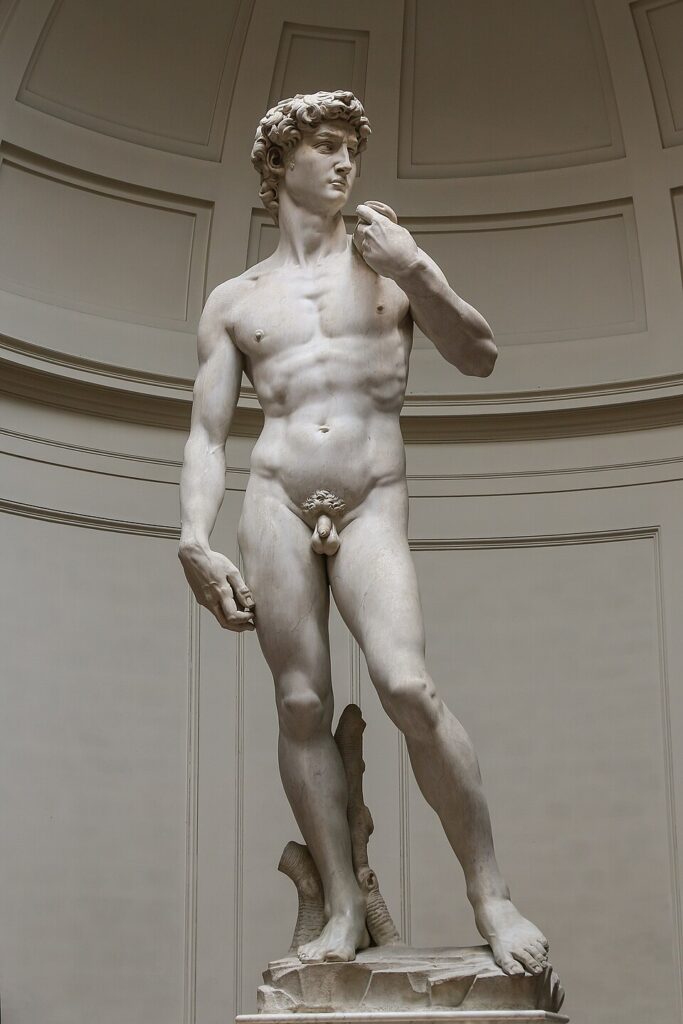
David by Michelangelo, Florence Galleria dell’Accademia
Jörg Bittner Unna, CC BY 3.0 https://creativecommons.org/licenses/by/3.0, via Wikimedia Commons

David is one of the most noteworthy figures in the Bible. He is remembered as the shepherd boy who slew Goliath, the gifted musician who soothed King Saul’s troubled mind, the adulterer whose affair with Bathsheba brought tragedy upon his household, and the pious king traditionally credited with composing many of the Psalms. In both Judaism and Christianity, he occupies an even greater place as the founder of the royal dynasty from which the Messiah was expected to descend.

Yet before he ruled from Jerusalem, David spent years doing something very different. He recruited a private army, forged alliances, protected settlements, raided his enemies and even sought refuge with a Philistine king. Whether these stories preserve historical events has long been debated. But the question of what “really happened” often obscures a more revealing one: what kind of political figure was the historical David? Viewed against the geopolitical realities of the tenth century BCE, he emerges not simply as a legendary king, but as a remarkably successful military entrepreneur who transformed a personal following into one of the ancient Near East’s most enduring dynasties.

Continue reading “David, a military entrepreneur who built a kingdom”

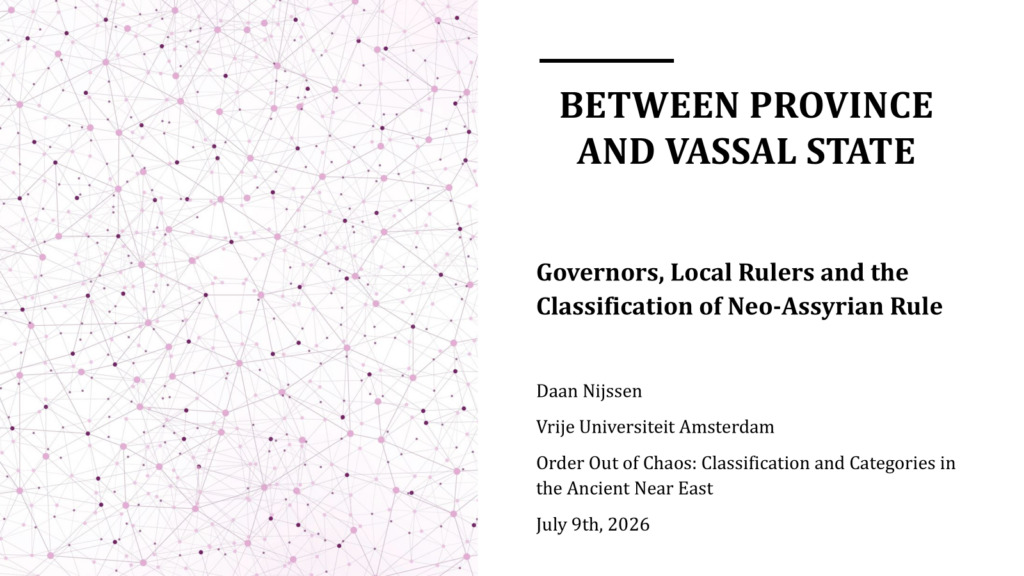
Between Province and Vassal State

Governors, Local Rulers and the Classification of Neo-Assyrian Rule

On Thursday 9 July 2026, I presented a paper at the conference Order Out of Chaos: Classification and Categories in the Ancient Near East at University College London as part of my PhD research. The paper explores the often blurry boundary between provinces and vassal kingdoms in the Neo-Assyrian Empire and argues for a new interpretation of the role of governors in Assyrian imperial rule.

Continue reading “Between Province and Vassal State”

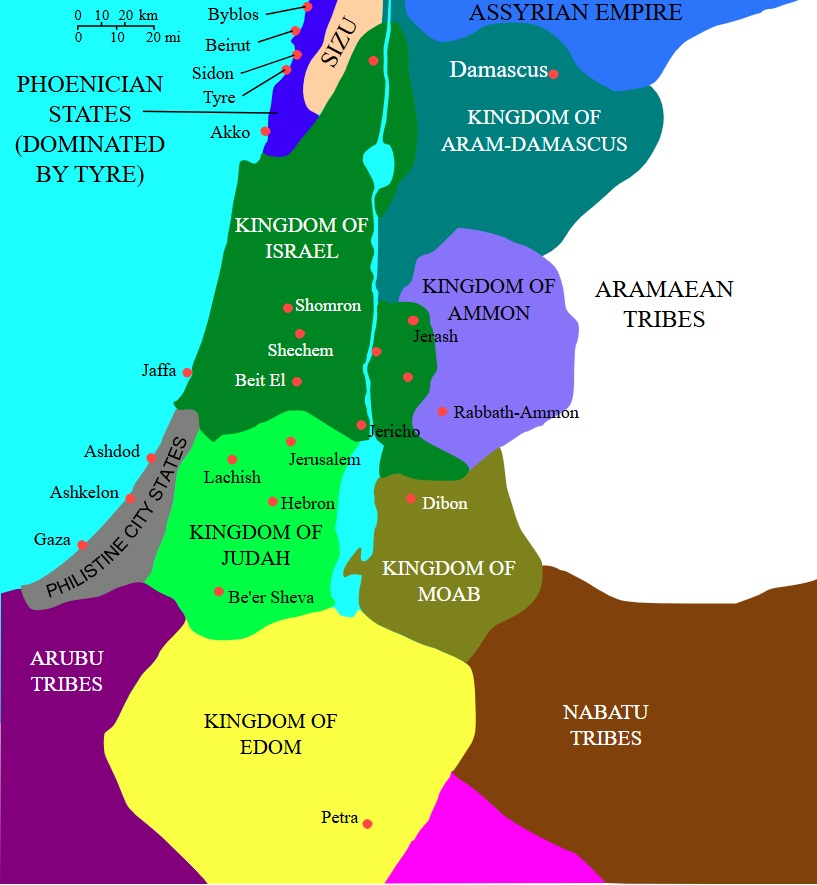
Ahab, the king who made Israel a regional power

The kingdoms of the southern Levant (830 BCE)
Briangotts on en.wikipedia and Slashme on en.wikipedia, CC BY-SA 3.0 http://creativecommons.org/licenses/by-sa/3.0/, via Wikimedia Commons

For many readers familiar with the Bible, Ahab (r. 874–853 BCE) is remembered primarily as the wicked king who opposed the prophet Elijah and allowed the worship of Ba’al in Israel. Yet this image reflects the concerns of later biblical authors rather than the geopolitical realities of the ninth century BCE.

Viewed through the lens of contemporary Near Eastern politics, Ahab appears as a remarkably capable ruler. During his reign, Israel became one of the strongest kingdoms in the Levant, capable of challenging Damascus, projecting power over its neighbours, and contributing one of the largest contingents to the coalition that confronted Assyria at the Battle of Qarqar.

Continue reading “Ahab, the king who made Israel a regional power”