Was Babylon conquered at all?

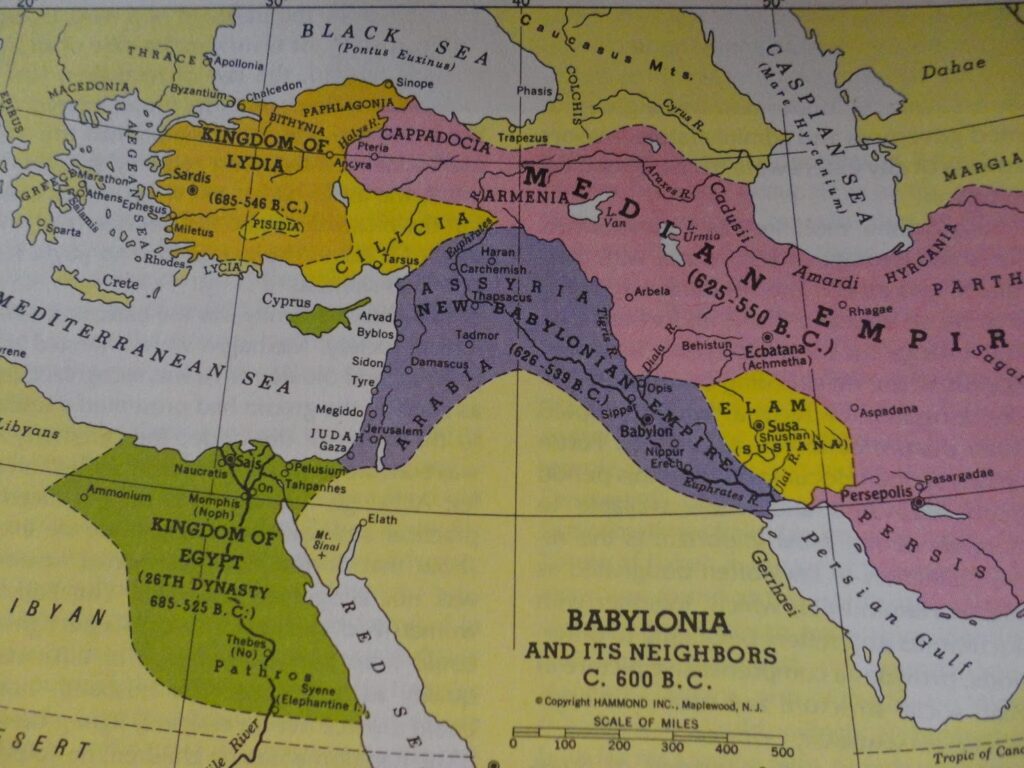
Babylonia and it’s neighbors ca. 600 BCE. The Median Empire (in pink) probably was more like a tribal federation – at that time led by Cyaxares – than a true empire. Cyrus became the new leader of this tribal federation after defeating Cyaxares’s son Astyages.
FaradzhoffEma, CC BY-SA 4.0 https://creativecommons.org/licenses/by-sa/4.0, via Wikimedia Commons

At the end of my previous post, I suggested that members of the Babylonian elite may already have been in contact with Cyrus before he invaded Babylonia in 539 BCE. Hedging their bets, they may have concluded that accepting the victorious warlord as their new king was preferable to risking a prolonged and destructive war. But this raises a more fundamental question. From our perspective, Babylonians deliberately helping Cyrus replace Nabonidus looks like collaboration with a foreign conqueror taking over their country. Yet that perspective is shaped by hindsight: we know what Cyrus’s victory eventually led to.

Open a historical atlas and compare the Near East before and after 539 BCE. On the first map, Mesopotamia, the Levant and much of northern Arabia are parts of the Babylonian Empire. To the east and north lies the rapidly expanding dominion of Cyrus. Turn the page and the Babylonian Empire has disappeared. Almost everything is now part of the Persian or Achaemenid Empire.

Maps make the transition wonderfully clear. Perhaps too clear. Nobody living in Babylon in October 539 BCE knew that the colour of their empire had just changed. Nor did they know that historians would divide Near Eastern history into a Neo-Babylonian period ending in 539 BCE and an Achaemenid period beginning immediately afterwards. They experienced a sequence of events: Nabonidus was defeated in battle, upon which Cyrus entered Babylon and became king. Whether this amounted to the destruction of one empire and its incorporation into another is already an interpretation.

Continue reading “Was Babylon conquered at all?”
Did the Babylonians invite Cyrus?

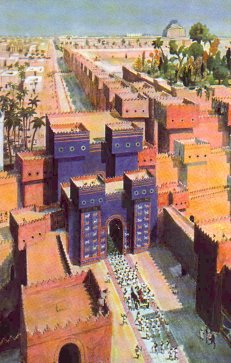
A royal procession through the Ishtar Gate, with Babylon in the background. Water color by W. Anger. In front: the Procession Street; center: the Ištar Gate; on the horizon: the Etemenanki.
Source: https://www.livius.org/articles/place/babylon/

In my previous post, I asked a deceptively simple question: why did Cyrus invade Babylonia in 539 BCE? With hindsight, the answer seems obvious. Cyrus the Great was building the Persian Empire, Babylonia was the next great prize, and after defeating the Babylonian army at the Battle of Opis he simply continued his victorious march. Sippar surrendered without battle, Nabonidus was captured, Babylon itself was occupied without a siege, and Cyrus became its king.

But Cyrus did not have the benefit of hindsight. When he embarked on the campaign, he could not know that one battle would be enough. A prolonged war against the wealthy cities of Babylonia, culminating in a siege of Babylon itself, was entirely conceivable. Yet that war never happened.

I ended the previous post with another possibility. Perhaps the military campaign recorded in the Nabonidus Chronicle was only the visible half of the story. Perhaps Cyrus had reason to expect that once he defeated Nabonidus in the field, influential Babylonians would accept him. What if he had already been negotiating with them?

Continue reading “Did the Babylonians invite Cyrus?”

Why was Babylon so easy to conquer?

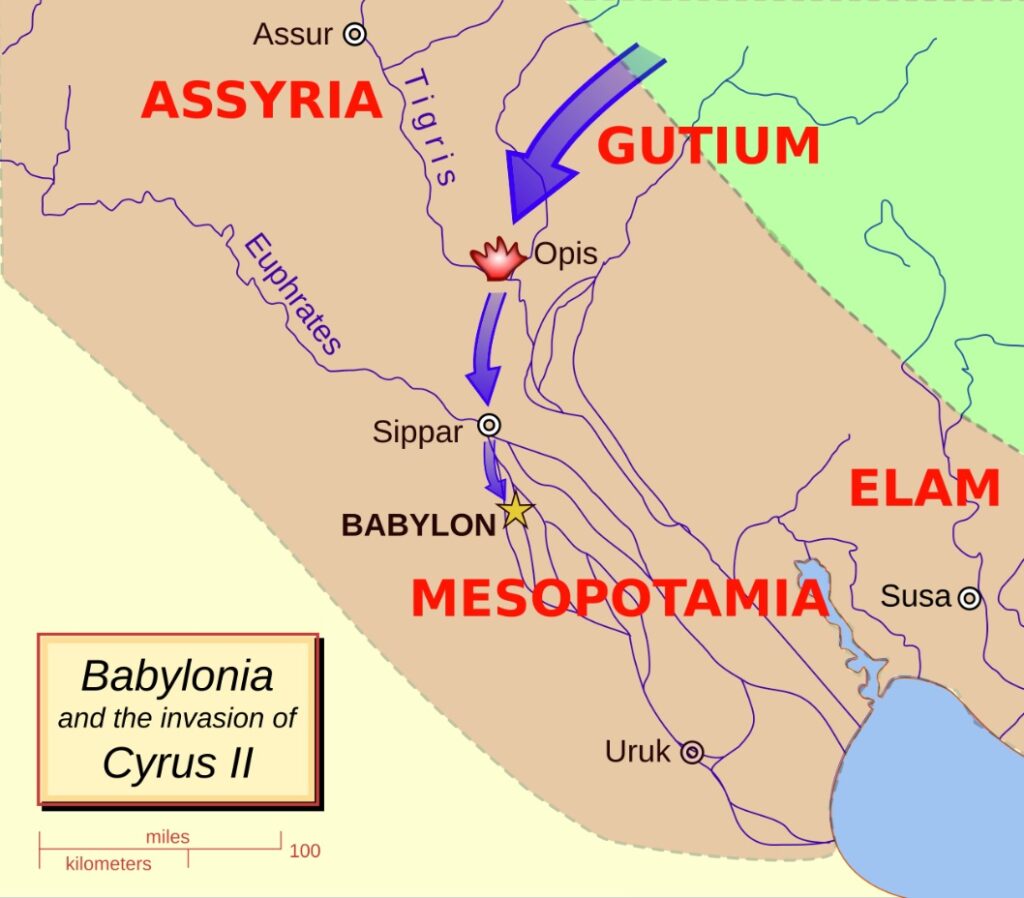
Map of Cyrus the Great’s invasion of Babylonia in 539 BC
ChrisO, Public domain, via Wikimedia Commons

In October 539 BCE, Cyrus the Great conquered the Babylonian Empire in one swift campaign. He defeated the Babylonian army at the Battle of Opis, captured the last Babylonian king Nabonidus, and took the city of Babylon without a battle. The Babylonian Empire thus became part of the rapidly expanding Persian Empire. At least, that is how we usually tell the story. I have often wondered how an empire as powerful and prestigious as Babylonia could fall so easily to a foreign conqueror. But perhaps we have been asking the wrong question.

We know surprisingly little about what actually happened. Our most important contemporary narrative source, the Nabonidus Chronicle, reduces the decisive events to a handful of brief paragraphs. Later Babylonian texts like the Cyrus Cylinder tell us how Cyrus’s new regime wanted his accession to be understood. And Greek authors like Herodotus and Xenophon provide elaborate yet unreliable stories written long after the event. But none of them gives us access to the political calculations taking place behind the scenes.

Continue reading “Why was Babylon so easy to conquer?”

Waarom verwelkomde Babylon zijn eigen veroveraar?

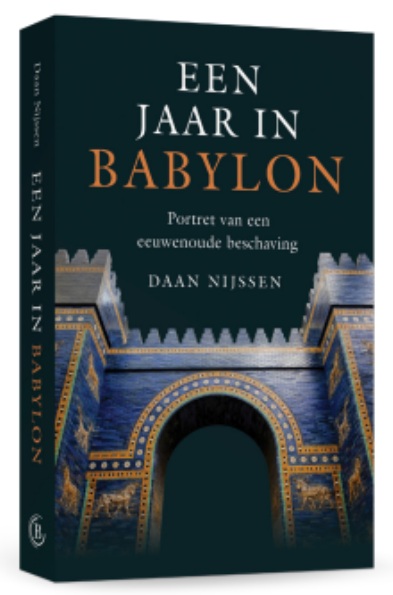
Op donderdag 3 september 2026 presenteerde ik in het Rijksmuseum van Oudheden mijn nieuwe boek, Een jaar in Babylon. In dat boek neem ik de lezer mee naar Babylon in 539 voor Christus: het jaar waarin de Perzische koning Cyrus de Grote de stad innam en een einde maakte aan het Babylonische Rijk.

Tijdens de boekpresentatie stond ik stil bij een van de merkwaardigste aspecten van die gebeurtenis. In de beroemde Cyruscilinder wordt Cyrus namelijk niet voorgesteld als de buitenlandse veroveraar die hij was, maar als een bevrijder die met instemming van de oppergod Marduk naar Babylon kwam en door de bevolking feestelijk werd onthaald. Waarom beschreven de Babyloniërs hun eigen veroveraar op die manier?

Hieronder lees je de tekst van mijn toespraak tijdens de boekpresentatie, waarin ik die vraag probeer te beantwoorden. Daarbij gaat het uiteindelijk niet alleen om Cyrus, maar vooral om de Babyloniërs zelf: om hun beeld van hun stad, hun goden en hun verleden, en om het verhaal waarmee zij probeerden te begrijpen dat hun wereld in 539 voor Christus voorgoed was veranderd.

Continue reading “Waarom verwelkomde Babylon zijn eigen veroveraar?”