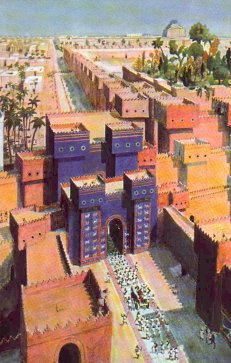
Source: https://www.livius.org/articles/place/babylon/
In my previous post, I asked a deceptively simple question: why did Cyrus invade Babylonia in 539 BCE? With hindsight, the answer seems obvious. Cyrus the Great was building the Persian Empire, Babylonia was the next great prize, and after defeating the Babylonian army at the Battle of Opis he simply continued his victorious march. Sippar surrendered without battle, Nabonidus was captured, Babylon itself was occupied without a siege, and Cyrus became its king.
But Cyrus did not have the benefit of hindsight. When he embarked on the campaign, he could not know that one battle would be enough. A prolonged war against the wealthy cities of Babylonia, culminating in a siege of Babylon itself, was entirely conceivable. Yet that war never happened.
I ended the previous post with another possibility. Perhaps the military campaign recorded in the Nabonidus Chronicle was only the visible half of the story. Perhaps Cyrus had reason to expect that once he defeated Nabonidus in the field, influential Babylonians would accept him. What if he had already been negotiating with them?
Nabonidus and the priests of Marduk
At first sight, this sounds suspiciously like an old and mostly discarded theory. For much of the twentieth century, the fall of Babylon was commonly explained through Nabonidus’s supposed unpopularity. He had promoted the moon god Sîn, interfered with traditional religious practices and, most notoriously, resided for about ten years at Tayma in Arabia. This supposedly antagonized the powerful priesthood of Marduk. When Cyrus appeared, the priests welcomed him as a liberator and afterwards presented him as Marduk’s chosen king.
There is a problem with this reconstruction: much of the evidence for Nabonidus’s supposed unpopularity comes from after his defeat. Texts produced under Persian rule, most famously the Verse Account of Nabonidus, had every reason to explain why he deserved to lose his throne. More recent scholarship has therefore been much more reluctant to imagine a bitter conflict between Nabonidus and the Babylonian religious establishment. I think that criticism is justified. But perhaps we have drawn the wrong conclusion from it. The Babylonian elite did not have to hate Nabonidus to decide that Cyrus was a better option.
Hedging your bets
By 539 BCE, Nabonidus was an old man who had ruled for seventeen years. His reign had been unusual, particularly because of his prolonged absence at Tayma, but there is little reason to suppose that this made him universally despised.
Cyrus presented a different problem. Within a few decades, this ruler from the Iranian highlands had defeated the Medes, conquered Lydia and established his authority over an enormous stretch of territory. As we saw in Part I, we should not imagine the fully developed Persian Empire already existing in 539 BCE. But Cyrus’s personal track record must have been intimidating.
What should a Babylonian governor, military commander, temple official or wealthy merchant have done when it became clear that this man was turning towards Babylonia? One option was to support Nabonidus and hope he defeated Cyrus. But political loyalty is not owed solely to one particular king. Powerful families and institutions have an interest in surviving changes of regime. Merchants maintain contacts across borders. Governors possess their own networks. Officials who publicly serve one ruler can quietly explore what might happen if another takes his place. In other words, they can hedge their bets.
The missing negotiations
So here is my hypothesis: before Cyrus invaded Babylonia, members of the Babylonian political, military, religious and perhaps mercantile elite had already established contact with him and indicated that they might accept him as king if he defeated Nabonidus.
This does not require a secret meeting at which “the Babylonian elite” collectively decided to betray their king. Different groups may have pursued different strategies. Some probably remained loyal. Others may have waited. Still others may have contacted Cyrus independently, whether to encourage him or simply to safeguard their position should he win. Nor would Cyrus have needed a formal invitation. The essential message could have been much simpler: defeat Nabonidus, respect Babylon and its institutions, and there will be people willing to recognize you as king.
No surviving source tells us that such negotiations took place. Private communications are precisely the sort of evidence we are least likely to possess. But the hypothesis offers an intriguing explanation for the puzzle encountered in Part I.
The battle that changed everything
Despite prior negotiations, Cyrus still had to invade Babylonia to stake his claim. Babylonian elites considering him as an alternative would have had every reason to wait until he demonstrated that he could actually win. Before the Battle of Opis, it was dangerous to support Cyrus. After Opis, supporting Nabonidus may have become dangerous. The battle could therefore have served as a trigger.
Perhaps the immediate capitulation of the main cities, and the acceptance of Cyrus as king of Babylon, is exactly what we should expect from a scenario in which political actors hedge their bets: prepare alternatives, wait for the balance of power to become clear, and then commit yourself. Seen this way, the Battle of Opis did not necessarily cause the Babylonian political order to collapse. It may simply have settled the question of which king that political order would support.
One intriguing figure is Ugbaru, governor of Gutium, who according to the Nabonidus Chronicle entered Babylon with Cyrus’s army. His identity and previous political position remain debated, but he’s thought to have been a Babylonian governor of Iranian descent who crossed over to Cyrus some time before his invasion. His presence reminds us that the political worlds of Cyrus and Nabonidus were not sealed off from one another. Cyrus’s expanding coalition had itself been assembled by incorporating previously independent or hostile rulers, soldiers and elites. Why should the Babylonian frontier have formed an impermeable barrier to the same process?
Invited to invade
There was also a Babylonian precedent. Almost two centuries earlier, Sargon II of Assyria fought for control of Babylonia against Marduk-apla-iddina II (Merodach-baladan). Sargon’s inscriptions claim that people from Babylon and Borsippa, including prominent citizens and temple personnel, came to him and invited him to enter Babylon after he had defeated his rival in the field. We see something similar happening after Alexander the Great had defeated the Persian king Darius III at the Battle of Gaugamela. Babylonian elites could negotiate with a foreign military power and support a change of king.
There also is an illuminating modern analogy for this phenomenon. In 1688, Prince William III of Orange, Stadtholder of Holland, Zeeland, Utrecht, Guelders, and Overijssel, crossed the North Sea with a large invasion fleet and landed in England with a predominantly Dutch army. It was an invasion. Yet William had also been invited.
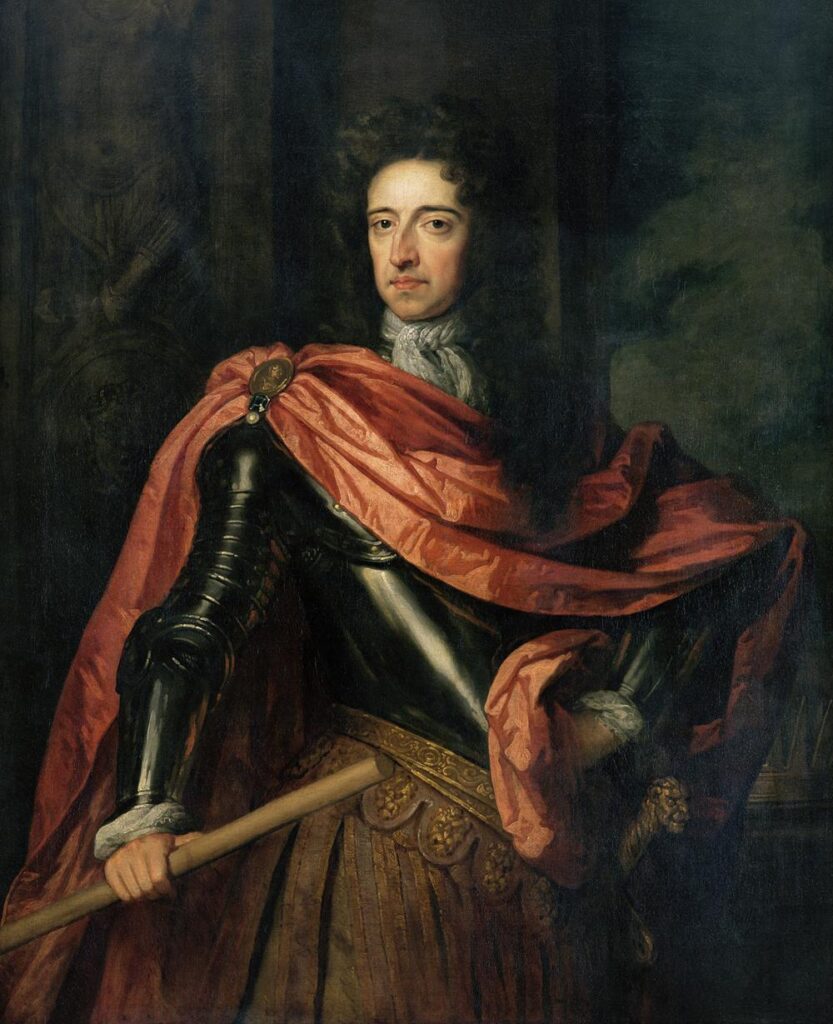
The Catholic king James II of England had alienated parts of the Protestant political establishment, and now the birth of a son raised the prospect of a Catholic dynasty. William was an obvious alternative: he was a leading Protestant ruler and the husband of James’s Protestant daughter Mary. Seven prominent Englishmen, later known as the Immortal Seven, secretly invited him to intervene. Once William had landed and demonstrated that his expedition was viable, politicians and military officers began defecting. James’s position rapidly disintegrated and he fled to France. In 1689, William and Mary became joint monarchs.
England in 1688 was obviously not Babylonia in 539 BCE. More importantly, for William we possess precisely the evidence that is missing for Cyrus: correspondence documenting contacts before the invasion. But that is why the comparison is useful. The case of William III of Orange demonstrates that invasion and invitation are not mutually exclusive. A foreign ruler can invade with an army while domestic elites facilitate his takeover, for reasons that need not entirely coincide with his own. Perhaps we should allow the same possibility for Cyrus.
Did they invite him?
We cannot prove that a Babylonian equivalent of the English “Immortal Seven” invited Cyrus. Perhaps no formal invitation ever existed. But we should take seriously the possibility that Cyrus invaded knowing that influential people within Babylonia were prepared to work with him. It would help explain why attacking such a formidable state was a rational gamble, why one military victory had such dramatic political consequences, and why the transition proceeded with so little further fighting.
More importantly, it restores agency to people who tend to disappear from accounts of imperial expansion. Babylonian elites did not have to choose simply between resistance and submission. They could assess the balance of power, communicate with potential allies, hedge their bets and decide which ruler best served their interests.
And that raises an even stranger question. We automatically describe such behaviour as collaboration with the conqueror. We know that Cyrus was creating the Persian Empire and that Babylonia would become part of it. But the Babylonians did not know that. If some of them deliberately helped replace Nabonidus with Cyrus, what did they think they were doing? Perhaps they did not believe that they were surrendering the Babylonian Empire at all.
More in Part III: Perhaps Babylon never fell.