Governors, Local Rulers and the Classification of Neo-Assyrian Rule
On Thursday 9 July 2026, I presented a paper at the conference Order Out of Chaos: Classification and Categories in the Ancient Near East at University College London as part of my PhD research. The paper explores the often blurry boundary between provinces and vassal kingdoms in the Neo-Assyrian Empire and argues for a new interpretation of the role of governors in Assyrian imperial rule.
Historians depend on categories. Without them, the immense complexity of the past quickly becomes impossible to understand. Yet categories can also create problems when the evidence refuses to fit neatly inside them.
The Neo-Assyrian Empire offers a good example. Modern scholarship has developed powerful ways of classifying Assyrian rule, but some cases remain difficult to place.
Before turning to those cases, I would like to start with one of the most influential models for understanding how the Assyrian Empire was organised.
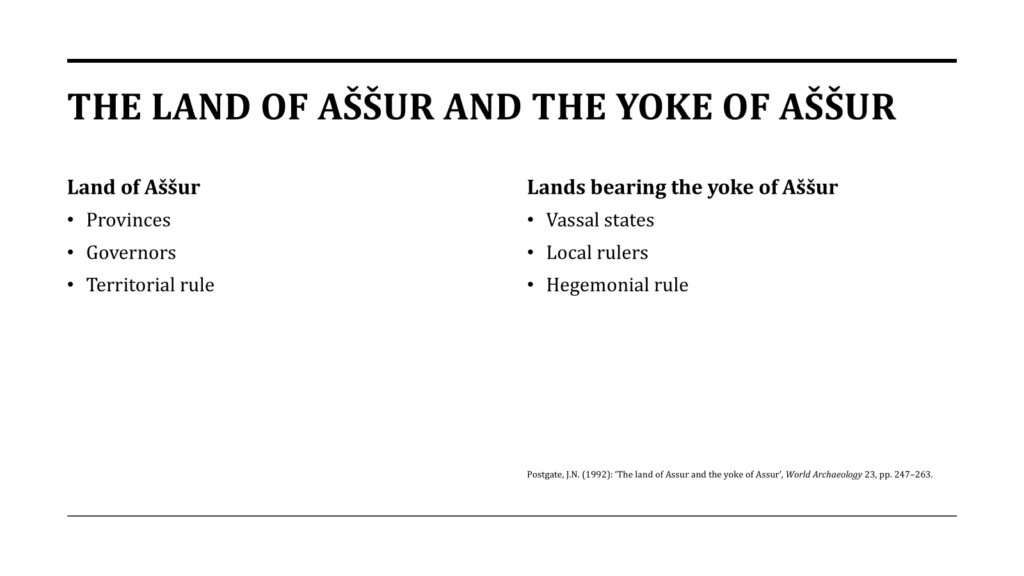
The model proposed by Nicholas Postgate has been highly influential in discussions of Neo-Assyrian imperial administration. According to him, the Assyrians distinguished between two different spheres of rule.
The first was the “land of Aššur”. These were territories that the Assyrians regarded as part of their own state. They were administered by governors appointed by the king, who answered directly to him and acted as his representatives.
Alongside this stood a second category: the lands bearing the “yoke of Aššur”. These territories remained under the authority of local rulers. Such rulers were bound by oath, paid tribute, and supported Assyrian interests, but retained considerable autonomy.
An important aspect of Postgate’s model is that it does not assume that the Assyrians always sought direct territorial expansion. In the ninth century and much of the eighth century BCE, Assyrian kings appear to have been perfectly satisfied as long as the kingdoms beyond the Euphrates acknowledged Assyrian supremacy and bore the yoke of Aššur.
From this perspective, the reign of Tiglath-pileser III marks a significant turning point. When Assyrian governors were appointed west of the Euphrates, Postgate interprets this as evidence for a fundamental shift in imperial policy. Territories that had previously only drawn “the yoke of Aššur” were now being drawn into the “land of Aššur”.
The strength of this model is obvious. It provides a clear distinction between direct and indirect rule and offers a straightforward way of classifying territories within the empire. If governors belong to the land of Aššur and local rulers to the lands bearing the yoke of Aššur, then the appearance of a governor seems to provide a reliable indicator of annexation.
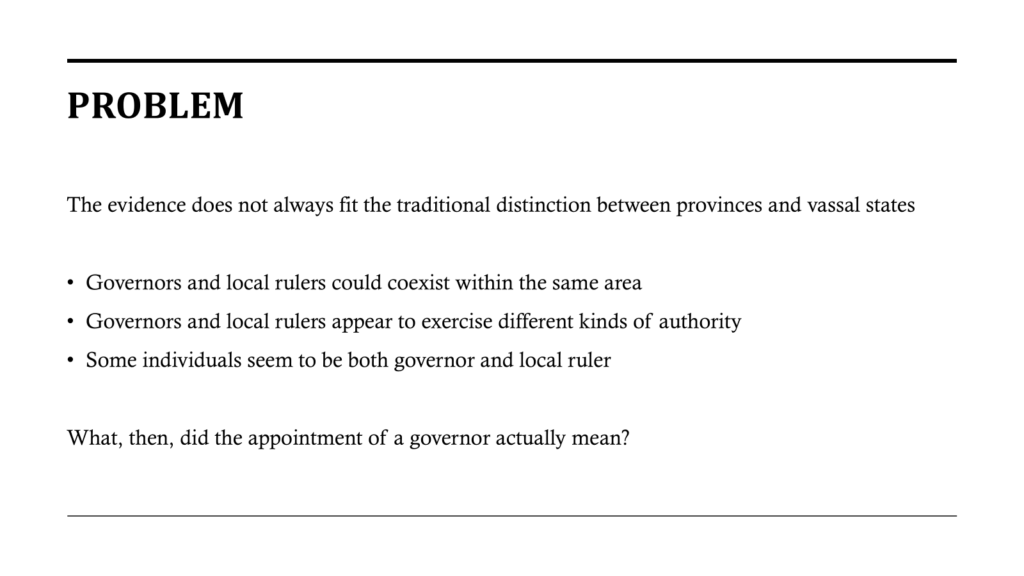
At first glance, this distinction appears straightforward. Governors belong to provinces, while local rulers belong to vassal states.
The evidence, however, is not always so clear-cut. In some cases governors and local rulers appear to coexist within the same “jurisdiction”. In others, they seem to exercise different kinds of authority rather than one replacing the other. And in at least one case, the same individual appears as both governor and local ruler.
These examples raise a fundamental question: what exactly did the appointment of a governor mean? Did it automatically signify annexation, as Postgate’s model would suggest, or could governors fulfil a wider range of functions within the Assyrian imperial system?
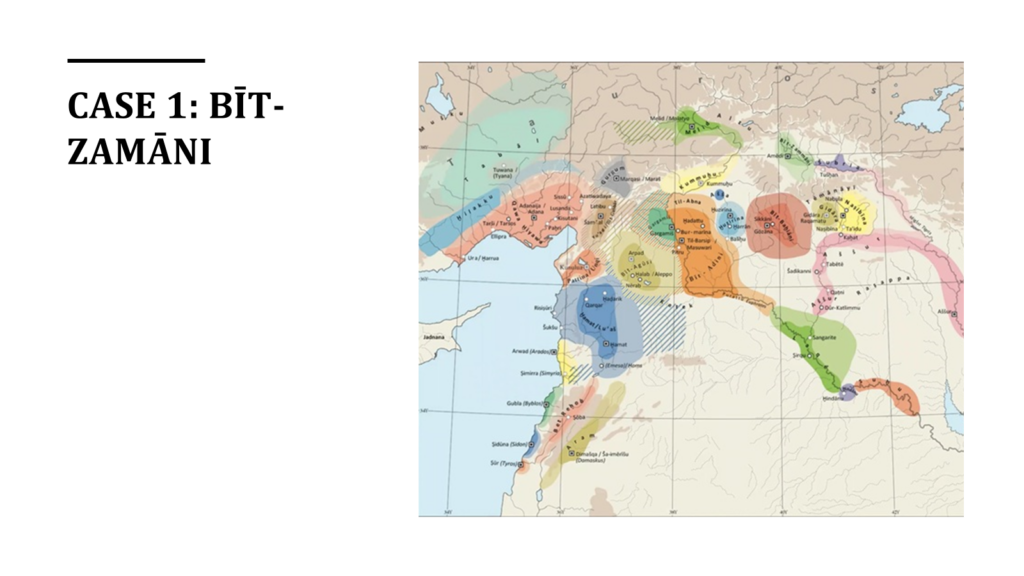
The first case comes from Bīt-Zamāni, an Aramaean chiefdom in the Upper Tigris region. After suppressing a revolt against the pro-Assyrian ruler Ammi-Ba’al, Ashurnasirpal II installed Ilanu as “sheikh” but annexed the strategic fortresses of Sinabu and Tidu.
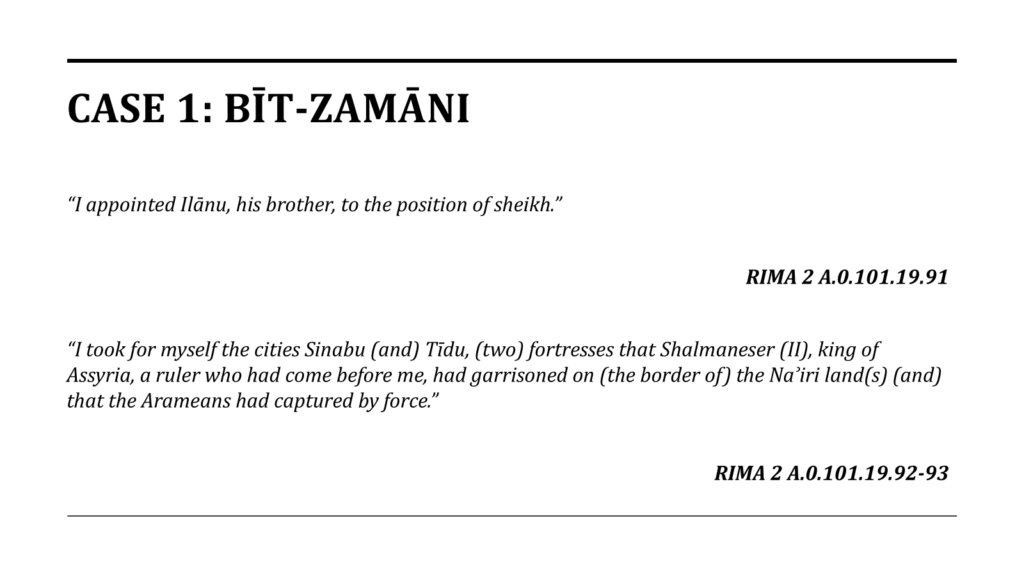
Although no governor is mentioned explicitly, these forts were probably administered by Assyrian officials. The result was a combination of direct and indirect rule: local administration remained in Ilanu’s hands, while strategic positions came under direct Assyrian control.
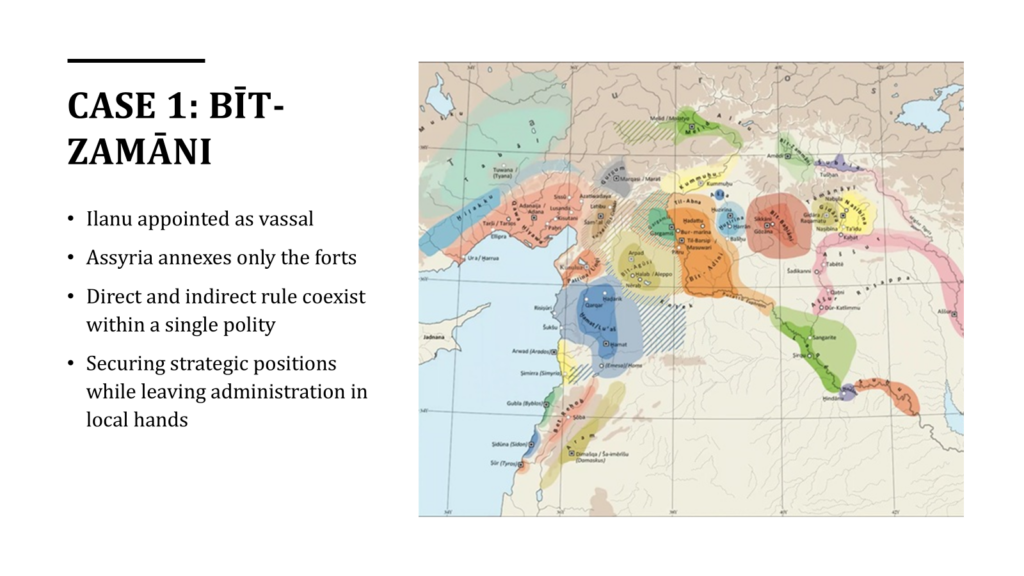
From an Assyrian perspective, this arrangement makes good strategic sense. The forts secured key military positions and communication routes in a frontier region, allowing Assyria to project power and safeguard its interests. At the same time, there was little need to replace the existing political structure entirely.
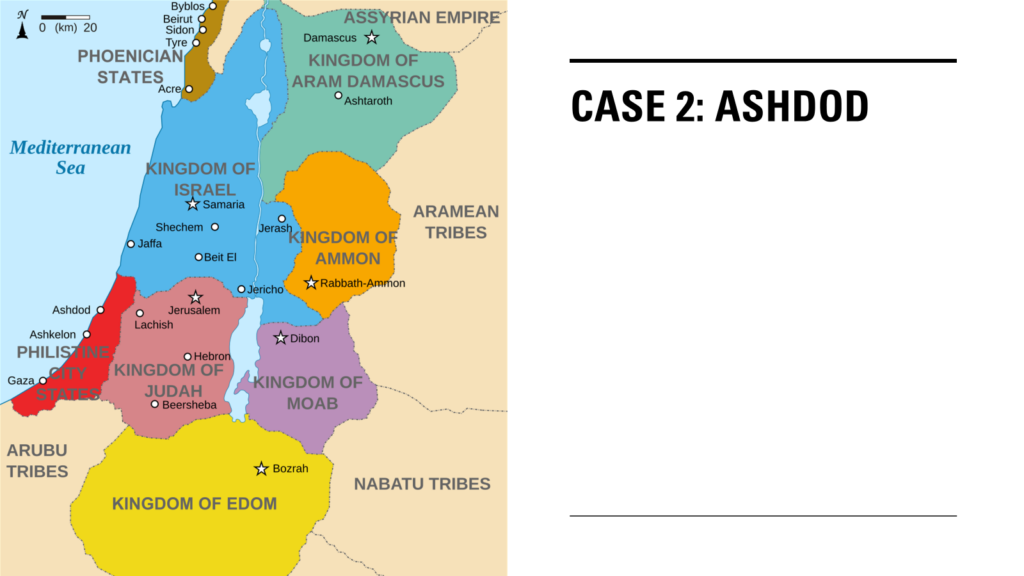
Our second case takes us to Ashdod, a major Philistine port city on the Mediterranean coast. Chronologically, this case is separated from Bīt-Zamāni by almost two centuries. The political context had also changed considerably. By the late eighth century BCE, the Assyrian Empire was increasingly expanding its territorial control across the Levant.
At this time, Assyria faced new strategic challenges. Egypt had just reunited under the 25th dynasty and Levantine rulers increasingly looked to its pharoah for support against Assyrian domination. For the Assyrians, therefore, the coastal cities of the southern Levant were not only sources of tribute but also key strategic assets in a wider geopolitical struggle.
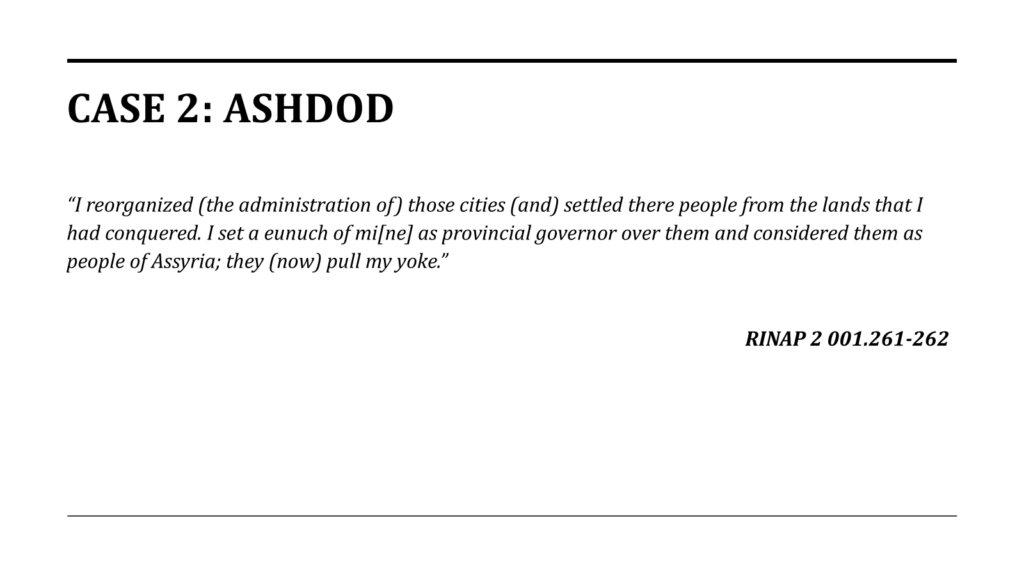
It is in this context, after the revolts of the local rulers Azuri and Iamani, that an Assyrian governor is installed in Ashdod. If Postgate’s model is correct, we would expect this appointment to indicate that Ashdod had been transformed from a vassal state into a province.
The evidence does not show local rulership disappearing after the appointment of a governor. In the decades that followed, we continue to encounter kings of Ashdod, including Mitinti and Aḫi-milki. Whatever authority the Assyrian governor exercised, it did not necessarily entail the removal of local dynasts.
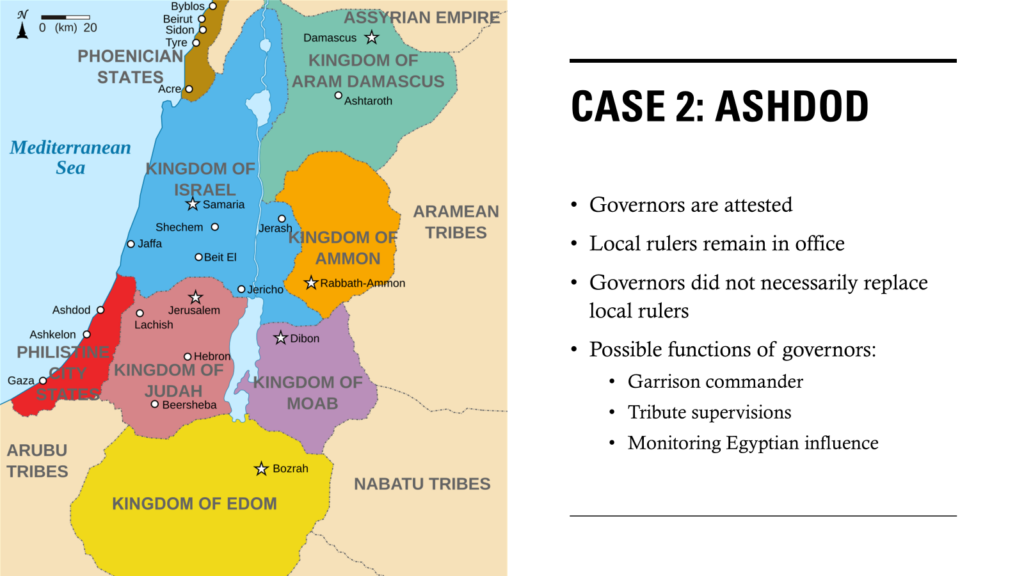
This raises the possibility that the two offices fulfilled different functions. While the local ruler remained responsible for governing the city and its population, the governor may have been concerned with specifically Assyrian interests, such as maintaining a garrison, supervising tribute payments, or monitoring Egyptian influence along the frontier.
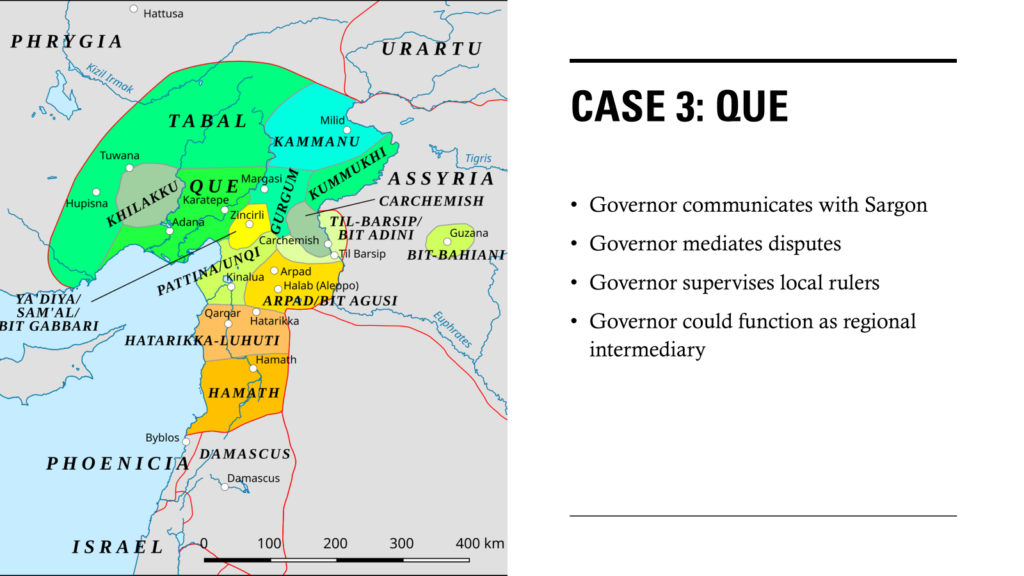
Our third case comes from Que in Cilicia during the reign of Sargon II. The region appears to have been divided among several rulers, creating a more fragmented political landscape.
At the centre of our evidence stands Aššur-šarru-uṣur, an Assyrian governor who corresponded directly with Sargon II. His letters provide a valuable glimpse into the practical workings of imperial administration. They show him reporting developments to the king, monitoring the activities of local rulers, and advising on regional affairs.
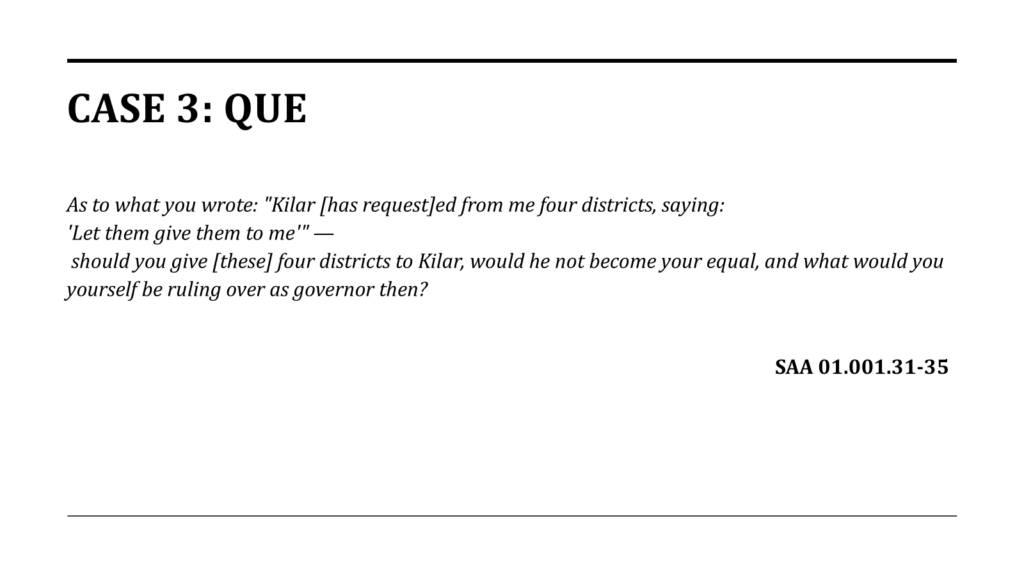
One letter is particularly revealing. Aššur-šarru-uṣur reports that a local ruled named Kilar has asked him for four districts and argues that granting this request would make Kilar his equal, leaving him with little territory of his own to govern.
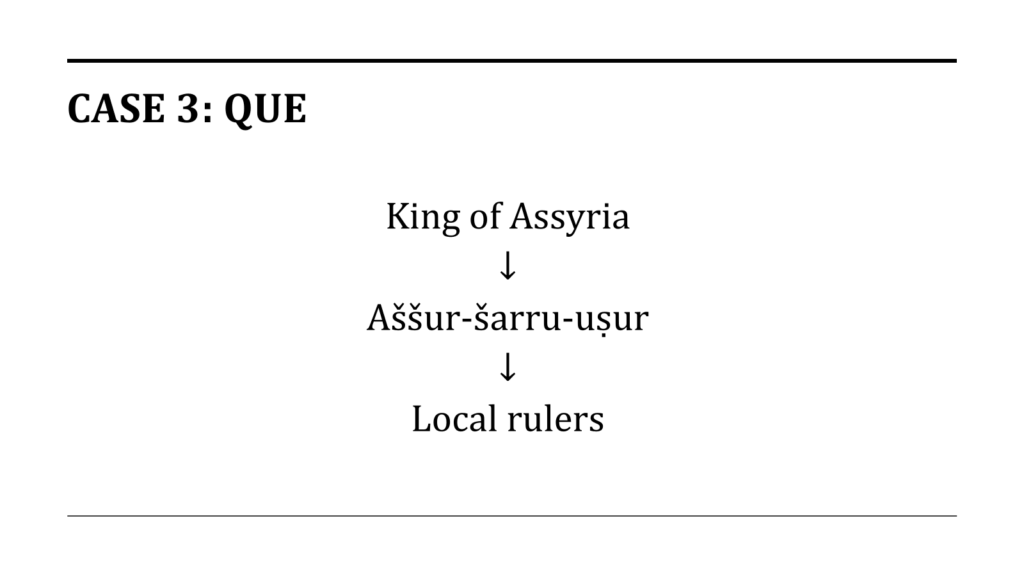
This passage suggests that the governor was not simply exercising authority over an entire province. Instead, he appears to have controlled a territorial domain alongside those of the local rulers. Rather than standing above the local dynasts as a provincial administrator, he seems to have operated among them as a powerful Assyrian representative whose authority derived from his relationship with the king.
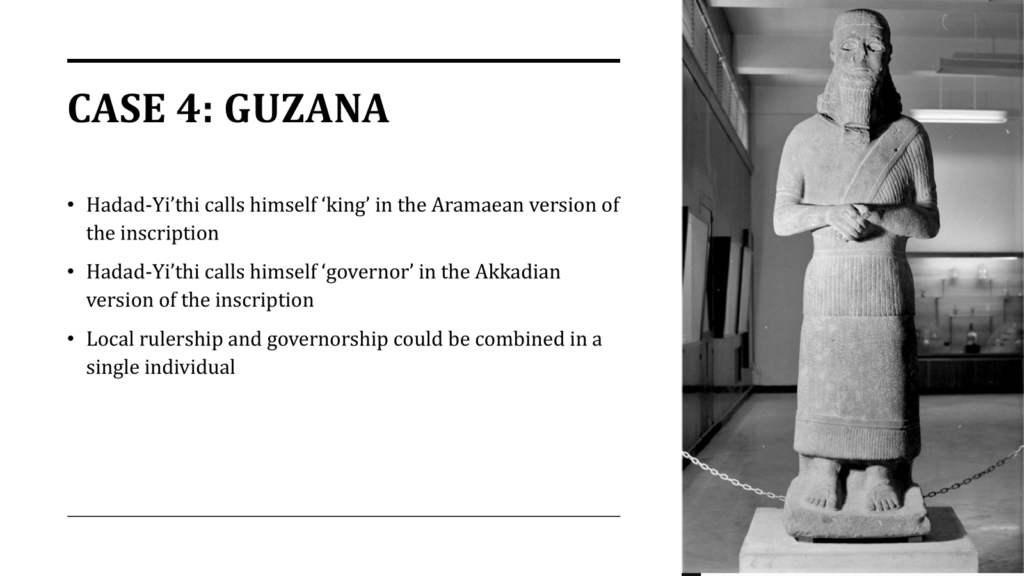
Our final case comes from Guzana, the capital of the former Aramaean kingdom of Bīt-Baḫiāni. Here we encounter a particularly intriguing figure: Hadad-Yi’thi, who was probably the descendant of a long line of local rulers.
What makes Hadad-Yi’thi remarkable is the way he presents himself in his bilingual inscription. In the Aramaic version, he bears the title “king”. In the Akkadian version, however, he calls himself “governor”. This suggests that Hadad-Yi’thi was addressing two different audiences and adapting his political identity accordingly.
For his Aramaean subjects, the title “king” emphasized continuity with the local dynasty and presented him as an autonomous ruler who belonged to the community he governed. For an Assyrian audience, however, the title “governor” conveyed something quite different. It signaled loyalty to the Assyrian king and membership in the imperial order.
If this interpretation is correct, then Hadad-Yi’thi was simultaneously a local ruler and an Assyrian governor. Rather than replacing one status with the other, the two identities coexisted within a single individual.
It is even possible that the governorship was bestowed upon him by the Assyrian king as a reward for longstanding loyalty. If so, Guzana offers a glimpse of how some Aramaean kingdoms may have been incorporated into the Assyrian imperial system without conquest or the removal of their ruling dynasties.
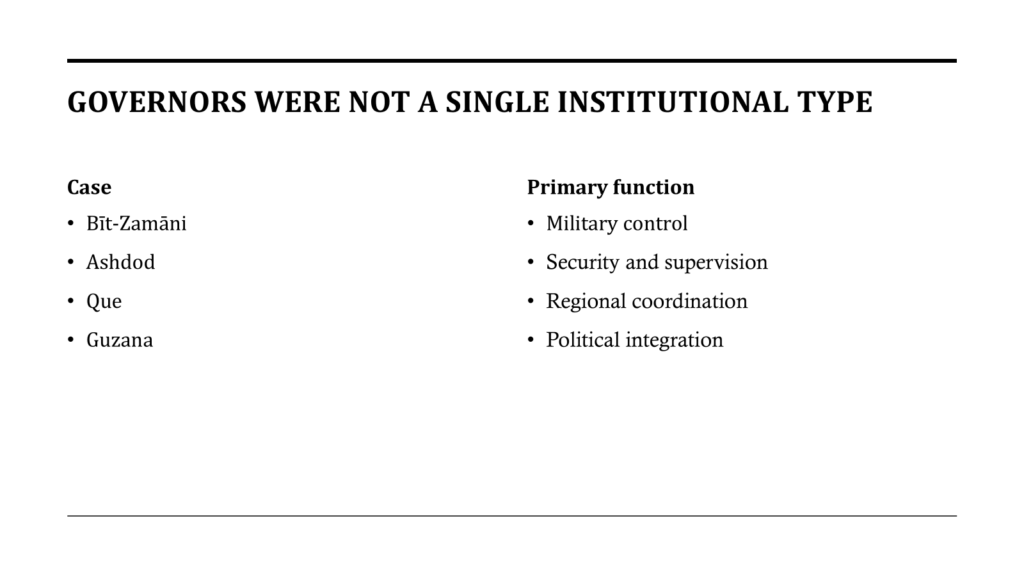
Although the four examples discussed here differ considerably in date and context, they all illustrate the same methodological problem. Historians often work backwards from administrative titles to political structures. A governor is assumed to imply a province; a king is assumed to imply a vassal state. Yet the evidence suggests that these categories did not always correspond neatly to realities on the ground.
This should perhaps not surprise us. The Neo-Assyrian Empire governed a vast and diverse collection of societies stretching from the Zagros Mountains to the Mediterranean. It would be remarkable if a single administrative formula had been applied everywhere in exactly the same way. Like most successful empires, Assyria appears to have relied on a degree of pragmatism, adapting institutions to local circumstances and strategic needs.
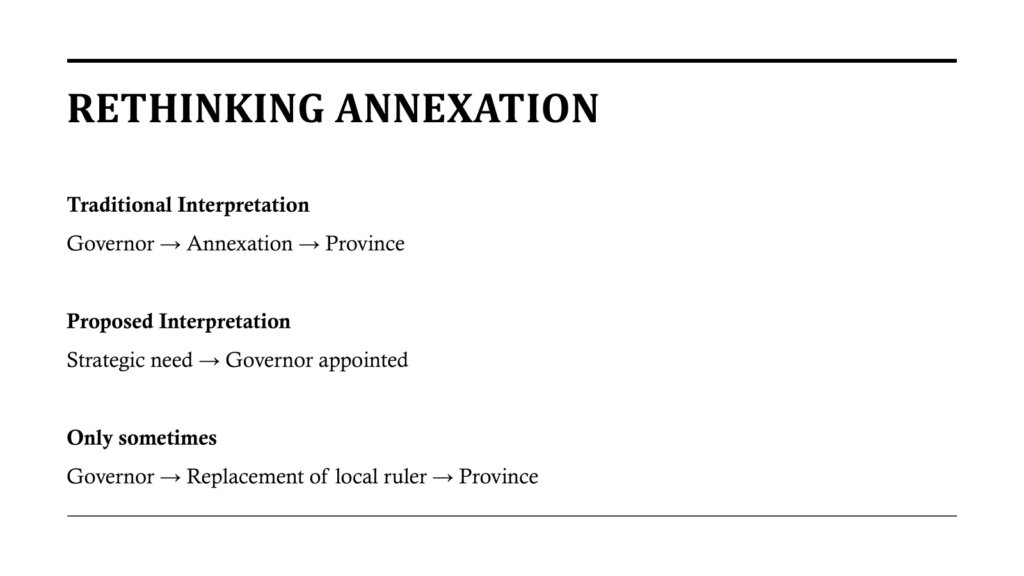
This observation has important implications for how we interpret the appointment of governors. Traditionally, the appearance of a governor is often treated as evidence that a territory had been annexed and transformed into a province. The cases discussed here suggest that the relationship was not always so straightforward.
Rather than viewing governors as markers of a fixed constitutional status, it may be more useful to think of them as instruments through which the Assyrian state projected influence. In some regions they exercised direct territorial authority. Elsewhere they supervised local rulers, controlled strategic locations, coordinated diplomacy, or represented Assyrian interests without displacing existing political structures.
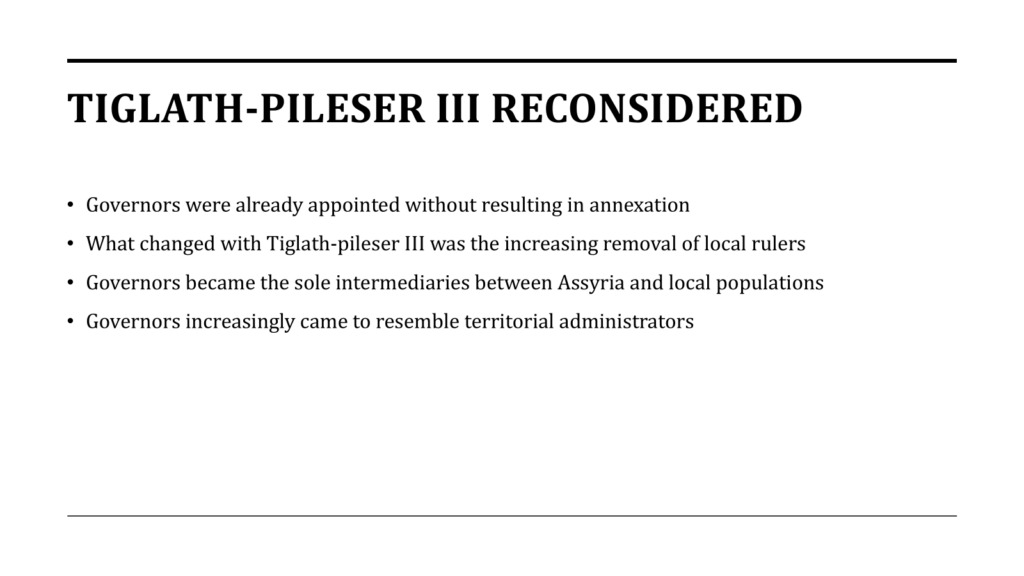
From this perspective, Tiglath-pileser III’s reforms appear in a somewhat different light. The appointment of governors was not itself new. What changed was the growing tendency to remove alternative centres of authority. As local dynasts disappeared, governors increasingly became the sole intermediaries between the Assyrian state and local populations. Under those circumstances, the office naturally came to resemble the territorial administration familiar from the later empire.
None of this requires us to abandon the distinction between provinces and vassal states. The distinction remains useful and reflects genuine differences in the degree of Assyrian control. The difficulty arises when those categories are treated as mutually exclusive and universally applicable.
The cases examined here suggest that the Assyrian imperial system was often more fluid than our modern terminology implies. Between direct rule and indirect rule lay a range of intermediate arrangements in which Assyrian officials and local rulers could coexist, cooperate, and sometimes even overlap. The appointment of a governor was therefore not necessarily the end point of annexation, but could also represent one stage in a longer and more gradual process of incorporation.
In that sense, the boundary between province and vassal state was not always a line. More often, it was a zone of negotiation, adaptation, and shared authority.