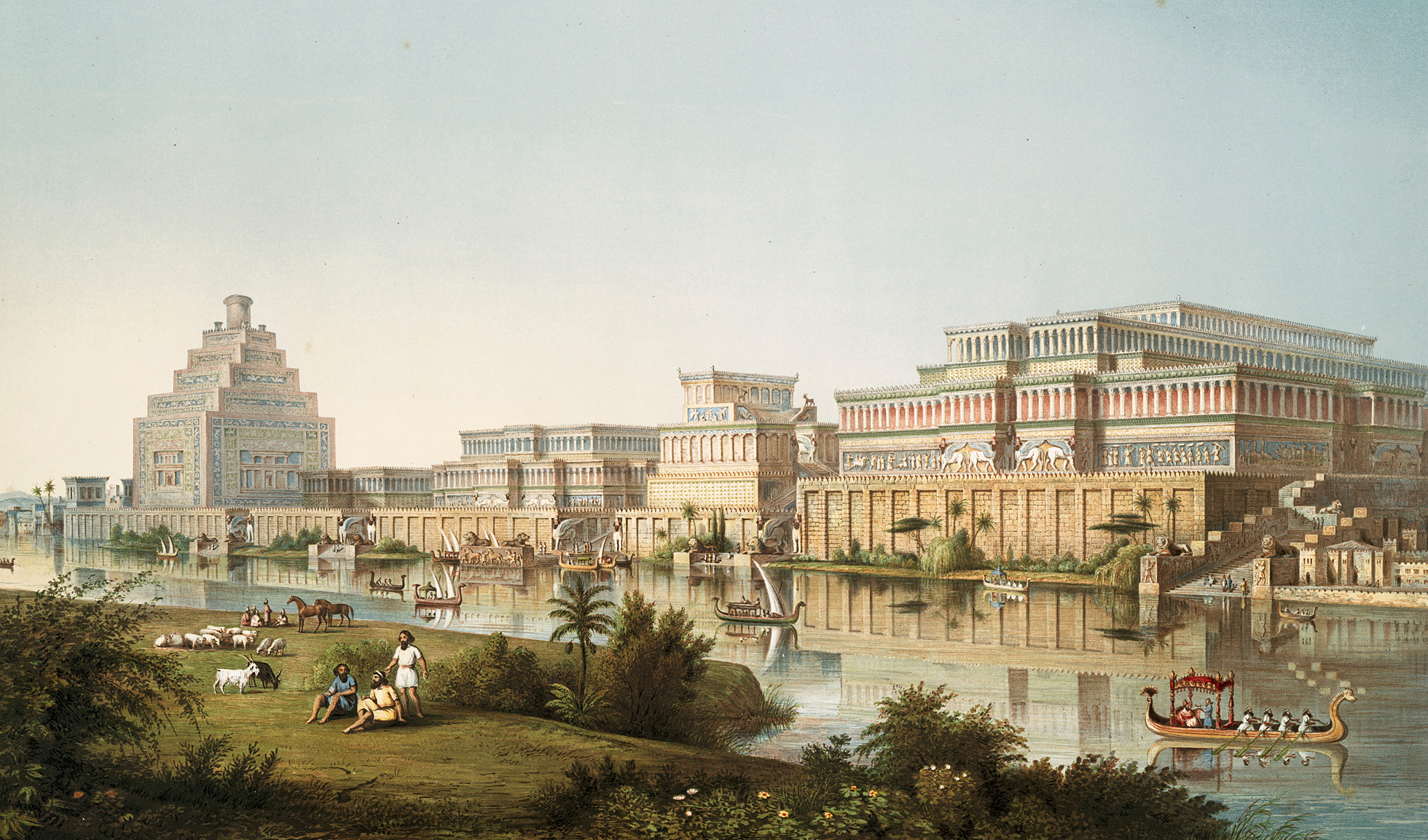
The Assyrian Empire has a public relations problem. Watch any documentary or read any popular history website and there is a good chance that within minutes someone will be impaled, flayed, or have their city burned to the ground. Preferably all three. The accompanying narrator will then solemnly inform us that the Assyrians ruled through terror, demanded impossible tributes from their neighbours, sought to conquer the entire known world and eventually suffered a well-deserved downfall.
This image is not entirely without foundation. The Assyrians were perfectly capable of extreme violence and, unlike many rulers throughout history, they were remarkably eager to advertise it. Yet I often find myself frustrated by how predictable these portrayals have become. Not because they are completely wrong, but because they are so incomplete. The Assyrian Empire frequently appears as a stock villain: an ancient equivalent of the Galactic Empire, forever plotting conquest while everyone else waits to be conquered. The real Assyrian Empire was far more interesting than that.
The empire as villain
If popular history has taught me one thing, it is that the Assyrians spent most of their time flaying people alive. At least, that is the impression one gets from many documentaries. Before long, ominous music begins to play and an Assyrian king appears on screen next to a relief depicting prisoners. What follows is usually a catalogue of horrors. The message is clear: these were the bad guys.
To be fair, the Assyrians themselves encouraged this image. Royal inscriptions often describe military victories in vivid detail, while palace reliefs leave little doubt about the fate of defeated enemies. Assyrian kings wanted to project strength, inspire loyalty and intimidate opponents. Fear was part of their political toolkit. But modern audiences often make the mistake of taking this propaganda at face value.
Imagine describing the Roman Empire primarily through crucifixion. Or early modern Europe through witch burnings. Or the British Empire through colonial massacres. These subjects certainly deserve discussion, but few historians would argue that they tell the whole story. With Assyria, however, violence often becomes the story.
The reason is not difficult to understand. Cruelty attracts attention. A video entitled The Most Brutal Empire in History is likely to attract more viewers than one entitled Provincial Administration in the Ancient Near East. Modern media rewards sensationalism, and Assyria provides plenty of sensational material. The irony is that we often end up reproducing exactly the image the Assyrian kings wanted us to see. Nearly three thousand years after their deaths, they are still winning the propaganda war.
The empire as the only actor
Another common tendency is to treat Assyria as the sole protagonist of Near Eastern history. In many popular accounts, events unfold according to a simple formula: Assyria acts and everyone else reacts. The Assyrians invade. The Assyrians demand tribute. The Assyrians conquer. The Assyrians destroy. The peoples surrounding Assyria appear mainly as victims waiting for history to happen to them.
Yet the ancient Near East was not a stage populated by extras. From major rivals like Urartu, Babylonia and Egypt to smaller states like Damascus, Judah and Tyre, it was a crowded geopolitical landscape filled with ambitious rulers pursuing their own agendas. They negotiated, resisted, formed alliances, switched sides and exploited opportunities. They shaped events every bit as much as the Assyrians did.
Consider the famous Battle of Qarqar in 853 BCE. Popular summaries often present it as another Assyrian attempt at expansion. Yet from another perspective, it was also a remarkable example of collective action among Levantine rulers. Kings who had recently fought one another set aside their differences to confront a common threat.
Or consider the kingdom of Urartu. Rather than simply submitting to Assyrian dominance, it emerged as a major rival power that successfully challenged Assyria for generations and reshaped the political landscape of northern Syria. History looks very different once we stop treating Assyria as the only actor in the story.
The empire with a master plan
Popular narratives also tend to portray Assyria as a state obsessed with world domination. Assyrian kings are often presented as if they were following a centuries-long blueprint for universal conquest. Expansion appears inevitable. Every campaign becomes another step toward a predetermined goal. Reality was messier. Empires rarely operate according to grand master plans. Most political leaders spend their time responding to immediate challenges rather than pursuing a carefully designed strategy stretching centuries into the future.
The Assyrians were no exception. Different kings pursued different priorities. Campaigns were often driven by local circumstances: rebellions, succession disputes, shifting alliances or emerging threats. The empire expanded, but not in a straight line. Some regions were annexed, others remained tributary states for centuries. Policies changed over time and often reflected practical considerations rather than ideological commitments. The image of Assyria as an unstoppable machine of conquest may make for compelling storytelling, but it obscures the uncertainty and improvisation that characterize most historical decision-making.
The empire through biblical eyes
The Bible remains one of our most important sources for the history of the ancient Near East. There is nothing inherently wrong with studying Assyria through a biblical lens. The problem arises when that becomes the only lens.
For many people, Assyria enters history through stories such as Jonah’s mission to Nineveh, the destruction of the kingdom of Israel or Sennacherib’s campaign against Judah. As a result, the empire often appears primarily as an antagonist in someone else’s narrative. The focus shifts away from Assyria itself and toward its role in biblical history.
This can create a distorted picture. Entire centuries of Assyrian history disappear from view because they have little connection to the biblical narrative. Regions and peoples that played crucial roles in Assyrian politics receive minimal attention because they are absent from the Bible. Imagine trying to understand the Roman Empire solely through its interactions with Judea. You would learn something important, but you would miss most of the empire.
The same is true for Assyria. The Assyrians were not merely the enemies of Israel and Judah. They ruled an empire stretching from the Persian Gulf to the Mediterranean, interacted with dozens of cultures and developed political institutions that influenced the Near East for centuries. Their history deserves to be studied in its own right.
The empire as a moral lesson
Perhaps the most persistent tendency is to turn Assyrian history into a morality play. The storyline is familiar. An empire becomes powerful. Its rulers become arrogant. They oppress their neighbours. Their cruelty reaches unbearable levels. Eventually the empire collapses and receives its just punishment.
It is a satisfying narrative. Humans have always enjoyed stories in which villains get what they deserve. The problem is that history does not necessarily share our sense of dramatic justice. The Assyrian Empire did not collapse because the universe decided it had been wicked for too long. It collapsed because of a particular combination of military defeats, internal tensions, succession crises and external enemies. The rise of the Medes and Babylonians mattered. Geography mattered. Political decisions mattered.
Historical explanations are often less emotionally satisfying than moral ones. Yet they are usually more illuminating. The fall of Assyria was not the final act of a cosmic courtroom drama. It was a historical event requiring historical explanation.
Recovering complexity
None of this means that the Assyrian Empire should be rehabilitated as a misunderstood victim of history. The Assyrians could be ruthless. They fought wars, imposed tribute, deported populations and punished rebellion. They were an empire, and empires are rarely gentle institutions. But neither were they cartoon villains.
They were rulers, administrators, diplomats, merchants, priests, scholars and farmers living in a complex world populated by other societies with ambitions of their own. Their empire endured for centuries not because it relied on terror alone, but because it developed sophisticated methods of administration, communication and political integration.
Perhaps that is ultimately what bothers me most about many popular portrayals. By reducing Assyria to a symbol of cruelty, they strip away the very thing that makes history worth studying in the first place: complexity. The Assyrians were more than history’s favourite villains. And the ancient Near East was far more than a stage on which they performed.
Thank you for writing this article. We need more articles like yours where ancient Assyrians are shown as they actually were. Ancient ruthless villains didn’t produce grand palaces, sophisticated and technically superior militaries, amazing gardens, roads, cities etc. These things demanded innovation and invention, which only come from civilized and cultured peoples. Stephanie Dalley has basically confirmed the Hanging Gardens of Babylon were actually in Nineveh, and built by one of the greatest of Assyrian Kings (Sennacherib). It’s time to undo what some religiously biased scholars have written about the ancient Assyrians.