In my previous post, I argued that the low frequency of Assyrian campaigns in the Levant between 841 and 743 BCE does not necessarily indicate stagnation or decline. Rather, it suggests that a relatively stable regional order had emerged in which local powers such as Damascus, Hamath, Luḫuti and Arpad largely managed their own affairs while Assyria focused its attention on developments in the north and east.
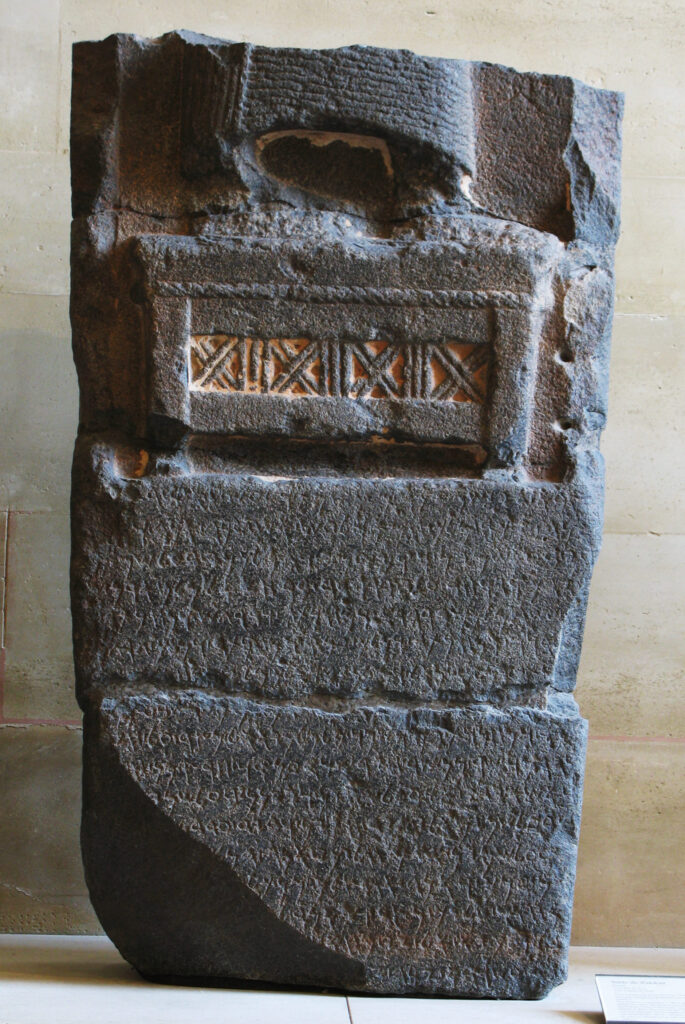
One of the clearest glimpses of this world comes from the reign of Zakkur, king of Hamath and Luḫuti. Who exactly Zakkur was remains unclear. In his own inscription, he claims that the god Baʿlshamayn raised him from humble origins and made him king. Scholars have often interpreted this statement as evidence that he was a usurper rather than a legitimate heir.
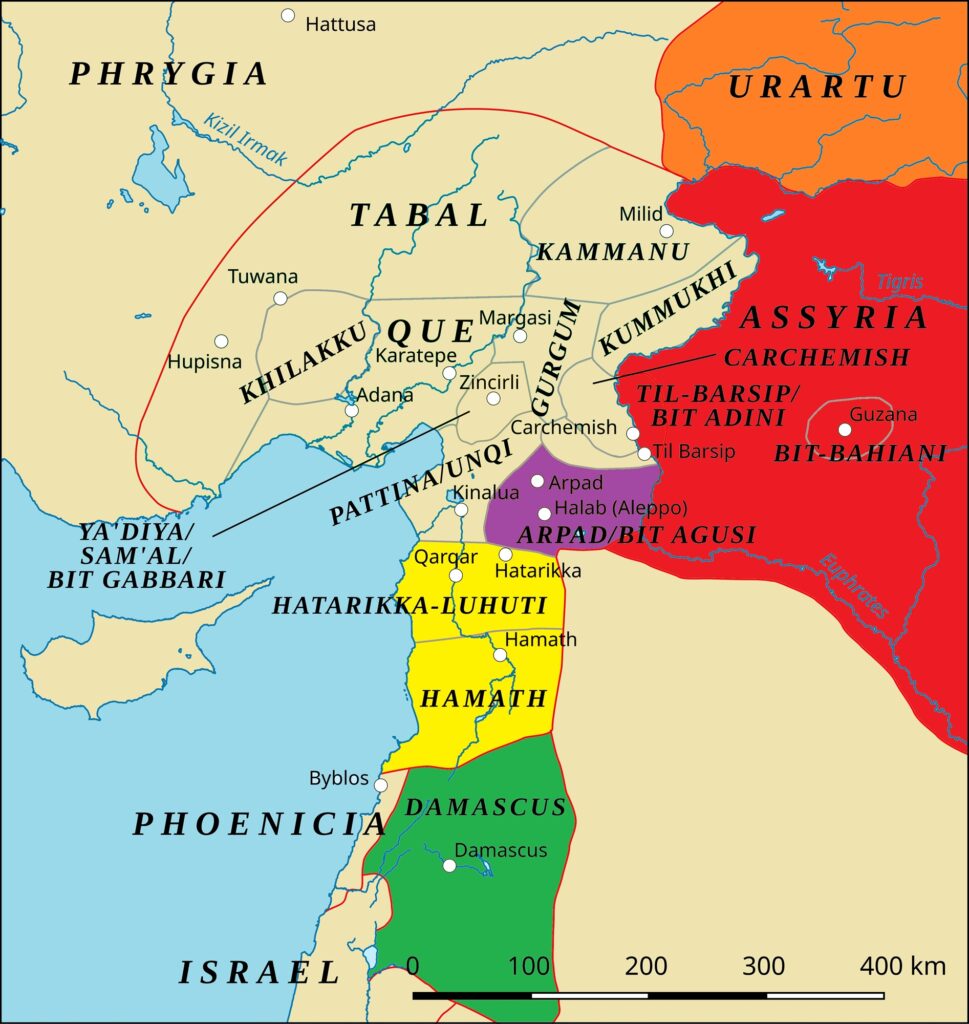
Zakkur probably originated from Hatarikka (Hazrach), the capital of Luḫuti, which remained his principal residence even after he acquired Hamath. How this happened is uncertain. He may have first become king of Luḫuti and later conquered Hamath, overthrowing its ruling dynasty in the process. Whatever the precise sequence of events, Zakkur succeeded in uniting two previously separate kingdoms and creating a larger and more powerful state than had existed before in central Syria.
Such a dramatic shift in the regional balance of power was bound to attract attention. It also alarmed many of Zakkur’s neighbours. The Zakkur Inscription (Translation adapted from COS 2.35, Alan Millard, p155, 2000 AD), discovered at Tell Afis (ancient Hazrach/Hatarikka), records how a coalition of states united against him:
Then Ben-Hadad, son of Hazael, king of Aram (Damascus), united against me seventeen kings: Ben-Hadad and his army, Bar-Gush (of Arpad) and his army, the king of Que and his army, the king of ʿAmuq and his army, the king of Gurgum and his army, the king of Samʾal and his army, the king of Meliz and his army … All these kings laid siege to Hazrach.
The inscription is one of the clearest examples of what modern International Relations scholars call ‘balancing’: the tendency of states to form coalitions against a power that appears to be growing too strong.
For decades, Damascus had been the dominant power in the Levant. Under Hazael, it had expanded at the expense of both Israel and Hamath and had confronted Assyria itself in 841 BCE. Yet by the late ninth century BCE, the political landscape appears to have shifted. Zakkur had united Hamath and Luḫuti and may have expanded into territories previously controlled or influenced by Damascus. The coalition described in the inscription may therefore represent an attempt to contain a rising regional rival.
Like many royal inscriptions, however, the text should not be read entirely literally. Zakkur claims that seventeen kings participated in the coalition and that:
They raised a wall higher than the wall of Hazrach; they dug a ditch deeper than its ditch.
Such statements belong to the rhetoric of royal inscriptions. It is unlikely that every allied king personally arrived with his entire army. Likewise, the besiegers probably did not literally construct fortifications surpassing those of the city itself. The purpose of the inscription was to magnify both the danger and the scale of Zakkur’s eventual deliverance.
According to Zakkur, that deliverance came through divine intervention:
I raised my hands to Baʿlshamayn and Baʿlshamayn answered me. Baʿlshamayn spoke to me through seers and diviners. Baʿlshamayn said to me, “Do not be afraid.”
For Zakkur, the god Baʿlshamayn was responsible for saving both king and kingdom. Modern historians, however, have long suspected that a more earthly power was involved. The most likely candidate is Assyria.
At roughly the same time, Assyrian sources record western campaigns directed against Damascus. It is entirely possible that Assyrian military pressure forced Ben-Hadad and his allies to abandon the siege. Even if no Assyrian army appeared before Hazrach itself, the mere possibility of Assyrian intervention may have been enough to unravel the coalition. In that sense, Assyria may have functioned as an offshore guarantor of the regional balance without directly governing the region.
The Zakkur Inscription therefore offers a valuable glimpse into the Levant during the century before Tiglath-pileser III transformed Assyrian policy. It was a world not yet dominated by empire but by competing kingdoms, shifting alliances and fragile balances of power. States such as Damascus, Hamath, Luḫuti and Arpad pursued their own interests, formed coalitions and competed for influence. Assyria remained an important actor, but often one operating in the background rather than through direct rule.
Far from being politically stagnant, the Levant of the late ninth and early eighth centuries BCE was a dynamic interstate system. The story of Zakkur shows that local rulers could still rise, alarm their neighbours, provoke balancing coalitions and reshape the regional order, at least until the emergence of the Neo-Assyrian Empire fundamentally changed the rules of the game.