On the evening of 9 November 1989, a mid-ranking East German border officer named Harald Jäger made a decision that changed the world.
Jäger had no authority to open the Berlin border. No one in the East German leadership intended it. But when thousands of citizens pressed against the Bornholmer Straße checkpoint, demanding to cross into West Berlin after a muddled government announcement, he found himself trapped between orders from above and a volatile crowd below. His superiors refused to take responsibility. The situation grew dangerous. And so, under immense psychological pressure, he did the unthinkable: he ordered the gates open.
Historians often explain the fall of the Berlin Wall by pointing to long-term structural forces: economic decline, political paralysis, popular dissatisfaction, the bankruptcy of the state. Yet in the end, the decisive moment came down to one man, at one gate, making one choice. And like all of us, Jäger acted according to his worldview: his sense of authority, safety, duty, human dignity, and the limits of obedience.
Macro-history meets micro-history in moments like this.
Understanding a worldview requires watching someone live inside it
For my upcoming book, Een jaar in Babylon, I set out to write about the Babylonian worldview in the sixth century BCE: their understanding of the gods, fate, kingship, ritual, astronomy, purity, and the precarious balance of the cosmos. I could have discussed these themes in the abstract, listing myths, describing rituals, and summarizing beliefs. But a worldview is not something you truly grasp by reading about it. You grasp it by watching it operate in real decisions, especially in difficult moments.
A belief system gains meaning when someone must act on it. This is as true in ancient Babylon as it was in 1989 Berlin.
That insight reshaped my project. Instead of writing only about ideas, I realised I needed to show how a worldview expresses itself in practice. How it guides judgment under pressure, how it frames fear and hope, how it shapes responses to crisis. And there is no better moment to explore this than the year 539 BCE, when Babylon faced the advance of Cyrus the Great.
The unknown man at the center of Babylon’s crisis
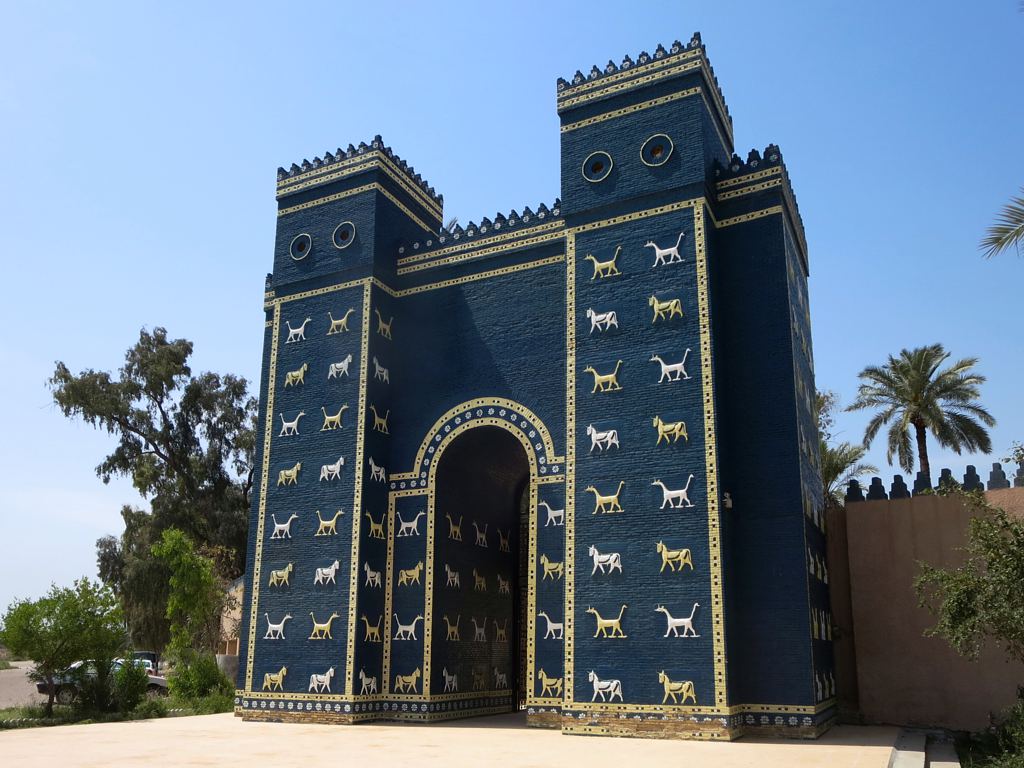
Cyrus and his armies were closing in. Prophecies circulated. Rumours spread through the markets and temples. Many distrusted their king. And at the center of this anxious, uncertain city stood a single figure whose identity has been lost to history: the šešgallu, the high priest of Marduk.
We do not know his name. But we know there must have been such a man, and we know the extraordinary responsibilities he held.
The šešgallu guarded the cult statue of Marduk, oversaw the rituals that maintained cosmic order, interpreted omens that shaped political decisions, and presided over the New Year’s festival that reaffirmed the very legitimacy of the king. He stood at the crossroads of religion, politics, astronomy, and public anxiety. And when the crisis of 539 BCE unfolded, he would have been one of the few individuals capable of influencing whether Babylon resisted, negotiated, or surrendered.
He was, in short, a Harald Jäger of the ancient world: a person whose worldview guided him at a moment when history pivoted. And yet we do not know who he was.
Introducing Bēlšunu
In Een jaar in Babylon, I give this unknown priest a name and a human presence: Bēlšunu. He is fictional, but everything around him is historically grounded: the rituals, the political tensions, the astronomical observations, the religious festivals, the doubts whispered in corridors, the hopes carried in processions. Through him, we enter Babylon not as observers, but as participants in its daily rhythms and its looming fears.
Bēlšunu embodies the worldview of his city. Through his eyes, the creation epic is not a text but a living reality. Celestial movements are not abstractions but signs from the gods. A failed ritual is not an inconvenience but a threat to cosmic stability. And the advance of Cyrus is not simply a military campaign but a test of whether Marduk still supports Babylon at all.
The stakes for Bēlšunu could not be higher. If the city falls, it will not merely be a political defeat. It will mean that the bond between humans and gods has fractured. Every decision he faces is framed by this cosmic perspective, just as Harald Jäger’s decision was framed by his own sense of duty, fear, and humanity.
What readers will find in Een jaar in Babylon
My book follows Bēlšunu through the seasons of 539 BCE. Each chapter immerses the reader in a different part of Babylonian life: the rituals in the Esagila, the political intrigues of the palace, the omens observed by astronomer-priests, the processions along the Processional Way, the tensions in the streets as news from the front reaches the city, and the subtler emotional landscape of a man whose world is built on cosmic order even as that order appears to crumble.
The book shows Babylon from the inside outward: from the private anxieties of its priests to the public ceremonies that defined its identity, from whispered fears about the king’s failures to the thunderous confidence of festival hymns, from mythic stories of creation to the messy, human decisions that determine the fate of real cities.
Above all, it shows how a worldview — any worldview — reveals its deepest truths not in calm, orderly times, but when events force individuals to act.
Bēlšunu is my guide into that moment. Through him, I hope to bring readers into a world that feels both distant and strangely recognizable, a world watching itself tremble as history accelerates around it. And though he never lived, he helps reveal something profoundly real: what it meant to be Babylonian at the moment their universe was tested.