
The king goes on tour (894 BCE)

In the spring of 894 BCE, the Assyrian king Adad-Nerari II (r. 911-891 BCE) marched west into the land of Hanigalbat (present-day Northeast Syria). City after city opened its gates. Rulers handed over tribute. Camps were pitched along the banks of the Ḫābūr River. The king crossed frontiers, entered capitals, and received chariots, horses, silver, and gold.

What is striking is not what happened, but what did not happen. There were no major sieges. No pitched battles. No dramatic massacres. Instead, the royal inscription (r. 97-119) presents a long procession of acknowledgments, negotiations, and submissions. For a tradition famous for celebrating violent conquest, this campaign reads almost like a diplomatic tour.

Why did so many rulers accept Assyrian authority without fighting? And what does this reveal about the nature of power in the early Neo-Assyrian period? To understand this unusual moment, we need to step back from the language of imperial inevitability and look at the political landscape through a slightly different lens: one inspired by International Relations (IR) theory.

Continue reading “The king goes on tour (894 BCE)”
When balance failed (7): A world out of sync

At the start of this series, I asked a deceptively simple question: why did no balance of power emerge in the Iron Age Near East, even though so many strong states existed alongside Assyria? The Late Bronze Age had produced something resembling a diplomatic equilibrium among great powers. The Iron Age, by contrast, seems dominated by a single hegemon that faced rivals one after another, but never all at once.

Over the past installments, we have examined those rivals individually: Urartu, Babylonia, Elam, Phrygia, and Egypt. Each possessed the potential to restrain Assyrian expansion. Each came close, in its own way. None succeeded in producing a stable multipolar order. The answer lies not in the failure of any one state, but in the historical circumstances that defined the Iron Age system itself.

Continue reading “When balance failed (7): A world out of sync”

When balance failed (6): Egypt and the return that came too late

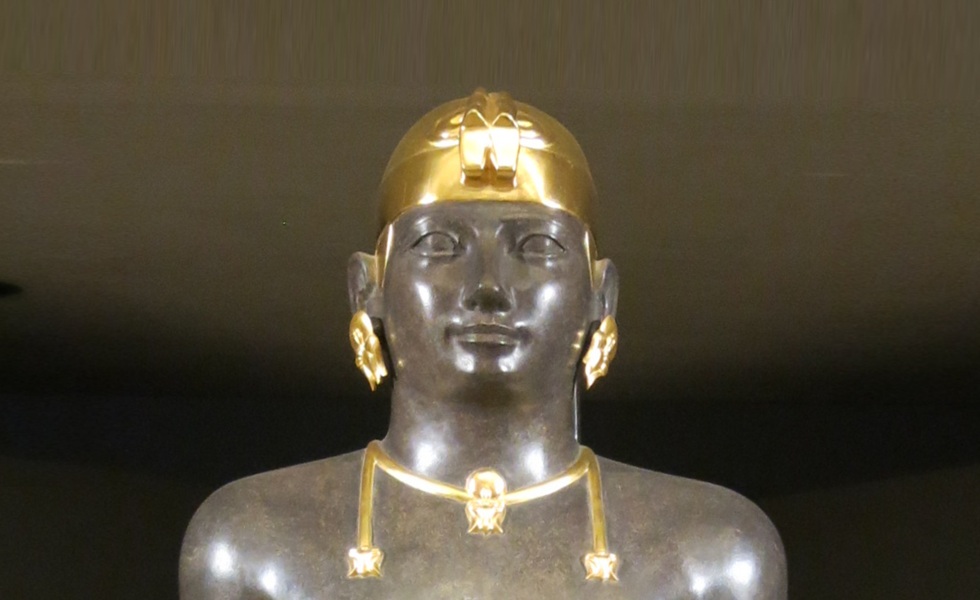
Statue of Taharqa, Louvre Museum

In the Late Bronze Age (1600-1200 BCE), Egypt had been the single most powerful actor in the Near East. Its wealth, manpower, and administrative reach made it a natural hegemon, and the famous Late Bronze Age balance of power can be read, at least in part, as a mechanism designed to prevent Egypt from expanding permanently beyond the Levant. Great powers such as Hatti, Mitanni, Babylonia, and Assyria negotiated, intermarried, and threatened one another in a system that implicitly acknowledged Egypt’s strength while limiting its freedom of action.

That system collapsed around 1200 BCE. Egypt survived, but it emerged diminished, inward-looking, and divided. When Assyria rose to dominance in the eighth century BCE, Egypt was no longer the stabilizing pole it had once been. Its eventual return to Near Eastern politics would come too late and under very different conditions.

Continue reading “When balance failed (6): Egypt and the return that came too late”

When balance failed (5): Phrygia, the rival that never materialized

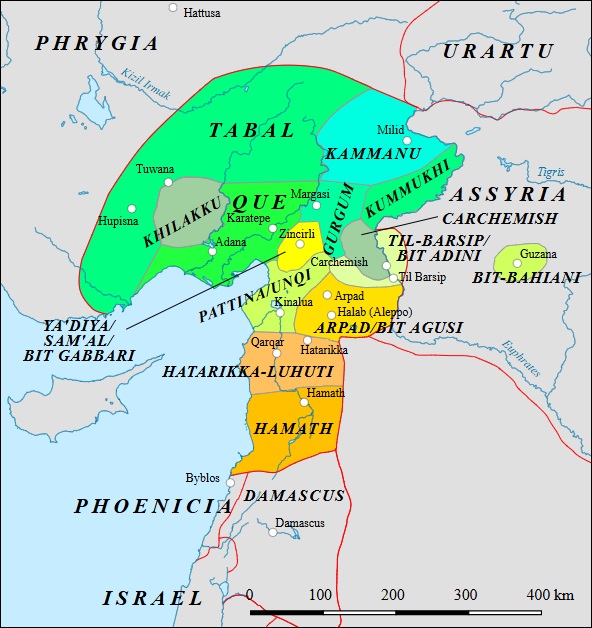
File:Neohititas-es.svg: Rowanwindwhistlerderivative work: Morningstar1814, CC BY-SA 3.0 https://creativecommons.org/licenses/by-sa/3.0, via Wikimedia Commons

In the previous installments of this series, we examined rivals that clearly shaped Assyria’s rise: Urartu on Assyria’s northern frontier, Babylonia at its ideological and political core, and Elam as a persistent eastern menace. Phrygia is a more ambiguous case. It is rarely treated as a serious rival to Assyria, and even within this series its inclusion is not self-evident. I hesitated to include it.

And yet Phrygia deserves a place here precisely because of its ambiguity. It was an independent regional power that maintained diplomatic relations with Assyria without becoming a vassal. For a time, it shared a frontier with Assyria in the Taurus Mountains. Its rulers chose alliance rather than resistance. And it was the only Anatolian polity that came close to replacing the Hittite Empire. Its disappearance was not the result of Assyrian conquest, but of an external shock. Phrygia did not fail to balance Assyria. I t never had the time to become a balancer at all.

Continue reading “When balance failed (5): Phrygia, the rival that never materialized”