In mijn vorige columns heb ik de Arameeërs al enkele malen genoemd. Deze losse groep herdersstammen afkomstig uit het huidige Syrië verspreidde zich tussen 1100 en 600 v. Chr. over het gehele Nabije Oosten. Als gevolg hiervan werd hun taal de voertaal van de regio. Dankzij de belangrijke positie van het Aramees ontstond in het Nabije Oosten een soort overkoepelende Aramese etniciteit waar bijna alle Semitische volken van de regio in op leken te gaan. Hoe is deze overkoepelende etniciteit ontstaan? Een lesje etnische identiteit in de Oudheid…
Oorsprong van de Arameeërs
De naam ‘Aram’ is waarschijnlijk afgeleid van het proto-Semitische woord voor ‘hoogland’. Een geografische aanduiding dus. Het is dan ook geen verrassing dat we deze naam al vanaf het derde millennium hier en daar in inscripties aantreffen. Pas rond 1100 v. Chr. raakt de naam ‘Arameeër’ echter geassocieerd met een volk. In deze periode van grote volksverhuizingen begonnen de nomadische herders die voorheen op de Syrische steppe hadden geleefd zich te verspreiden naar de steden van Syrië en Mesopotamië. De Assyriërs noemden hen ‘Ahlamu’, wat zoveel betekent als ‘zwervers’. Een deel van deze Ahlamu – de Ahlamu van het hoogland – kwamen bekend te staan als de Arameeërs. Deze Arameeërs vestigden tussen 1100 en 800 v. Chr. enkele middelgrote koninkrijken in Syrië, waaronder Bit Adini (Beth Eden), Hamath (Hama) en Damascus. Het laatste koninkrijk was een van de grootste rivalen van het oude Israël.
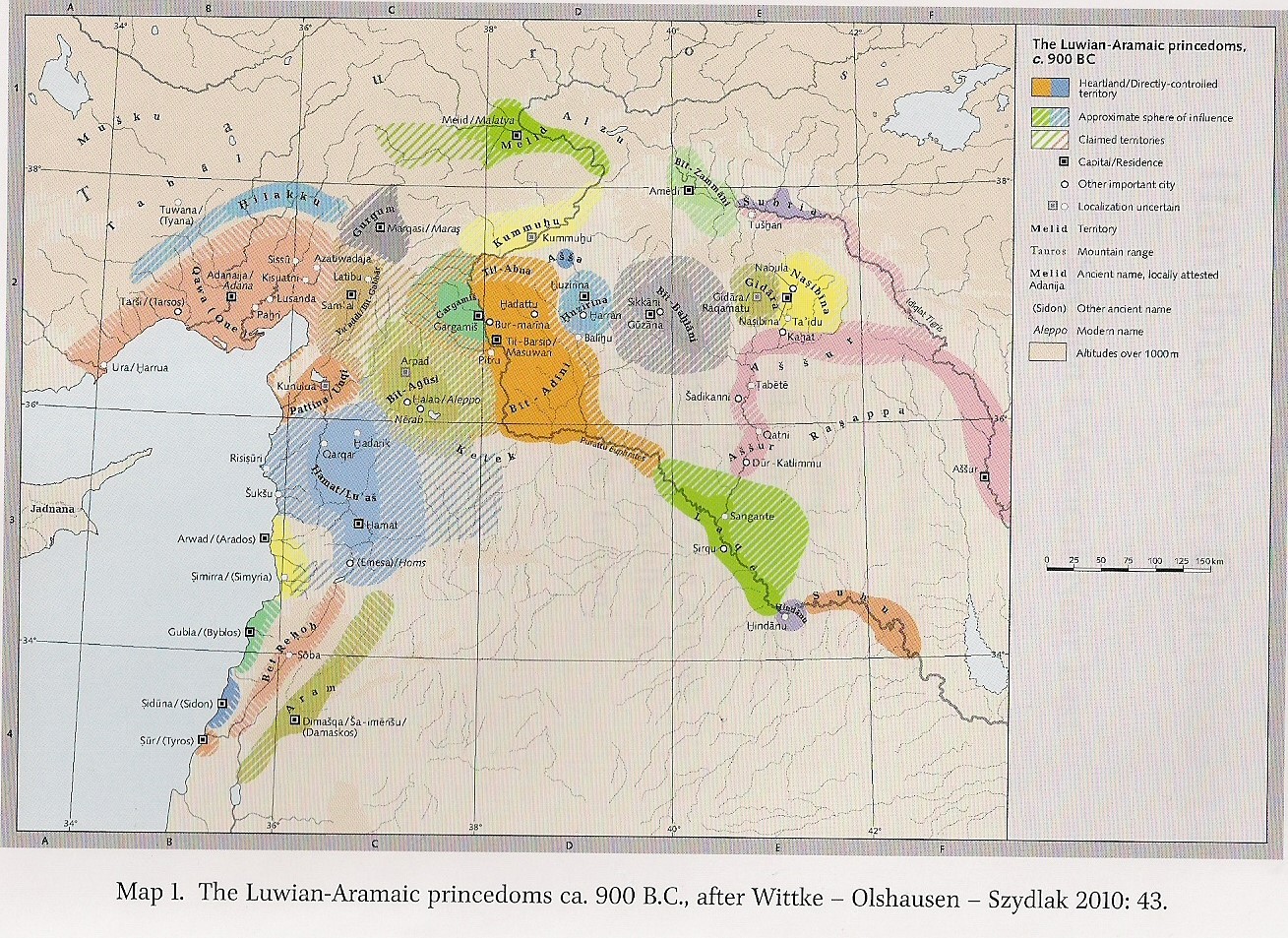
Aramese koninkrijken rond 900 v. Chr.
Naar: Wittke, Olshausen & Szydlak (2013), p. 43.
Verspreiding van de Arameeërs
De Arameeërs hadden zich al voor de Nieuw-Assyrische periode over grote delen van Assyrië verspreid. De verwante Chaldeeërs hadden zich gevestigd in Babylonië. Zij leefden daar in stamverband tussen de inheemse Akkadische bevolking. Met de opkomst van het Nieuw-Assyrische Rijk in de tiende en negende eeuw v. Chr. werden de Aramese koninkrijkjes stuk voor stuk door de Assyriërs geannexeerd. Damascus viel in 732 v. Chr. als laatste. De Assyriërs hadden het gebruik om opstandige onderdanen naar andere delen van het rijk te deporteren en de Arameeërs waren nogal vaak opstandig. Zo verspreidden de Arameeërs zich over het hele Assyrische Rijk en namen ze hun taal en cultuur met zich mee. Vanwege het grote verspreidingsgebied van het Aramees werd dit al snel de taal waarin onderworpen volken onderling communiceerden. De Akkadiërs, hun taal en hun cultuur raakten steeds meer geassocieerd met de heersende elite.
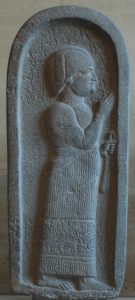
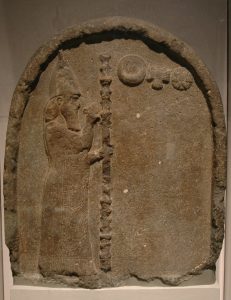
Aramese grafstèle uit Neirab of Tell Afis in Syrië (zevende eeuw v. Chr.).
Louvre, Parijs
‘Aramees’ als overkoepelende etniciteit
Zolang het Nieuw-Assyrische (911-612 v. Chr.) en later het Nieuw-Babylonische Rijk (612-539 v. Chr.) bleven voortbestaan, bleef het Akkadisch de taal van de administratie. Toen de Perzen echter het Nabije Oosten veroverden, besloten zij om het Aramees als rijkstaal te hanteren. Slechts een kleine minderheid van de inwoners sprak immers Akkadisch of Perzisch. De Perzische periode (539 – 330 v. Chr.) bracht vrede en stabiliteit. Oude rivalen als Babylonië, Egypte en Lydië waren nu in één rijk bijeengebracht en de oude Aramese koninkrijkjes behoorden inmiddels tot het verre verleden. De meeste Arameeërs konden waarschijnlijk niet meer zeggen uit welk koninkrijk hun voorouders kwamen. Waarschijnlijk identificeerden zij zich in de eerste plaats als lid van een bepaalde stam of inwoner van een bepaalde stad en pas in de tweede plaats als Arameeër. Etnische scheidslijnen vervaagden en ‘Arameeër’ werd een verzamelnaam voor bijna alle Aramees sprekende groepen.
Joden als Arameeërs
Niet alle volken namen de Aramese identiteit aan. De Joden bijvoorbeeld, die ook Aramees waren gaan spreken, hielden meer dan hun buren vast aan hun tribale identiteit. Hun religie was immers gebaseerd op een verbond dat hun god – de HEER – met hun volk had gesloten. Toch lijken veel buitenstaanders de Joden als Arameeërs of als ‘Syriërs’ te hebben beschouwd. Zo heeft de Griekse geschiedschrijver Herodotus het over de Syriërs van Palestina die aan besnijdenis doen (Herodotus 2.104). ‘Syriër’ lijkt in Griekse bronnen synoniem te zijn aan ‘Arameeër’. In de late Perzische periode werd de Joodse identiteit steeds belangrijker. In deze tijd kreeg de Tora zijn huidige vorm en werd het Joodse mannen verboden een niet-Joodse vrouw te huwen.
Arabieren en Assyriërs
De Arabieren waren eveneens te onderscheiden van de Arameeërs. Zij spraken immers een andere taal en hielden er een nomadische leefwijze op na. Toch spraken ook de Arabieren Aramees wanneer zij met hun Aramese buren communiceerden en vestigden ook zij zich uiteindelijk in de steden. De vraag of ook de Assyriërs zich bleven onderscheiden van de Arameeërs is controversieel. Vanaf de Perzische periode spraken de meeste Assyriërs inderdaad Aramees, maar dat zegt niet alles. Het beste argument voor het voortbestaan van een aparte Assyrische identiteit is dat de regio gedurende de hele Oudheid bekend is blijven staan als Assyrië. Ook Griekse auteurs lijken onderscheid te hebben gemaakt tussen Syriërs (Arameeërs) en Assyriërs (Mesopotamiërs), al waren zij niet altijd even consequent hierin. Kenmerkend aan de Mesopotamische ‘Arameeërs’ is dat zij Akkadische goden bleven vereren en hun kinderen Akkadische namen gaven, al zegt ook dat natuurlijk niet alles.
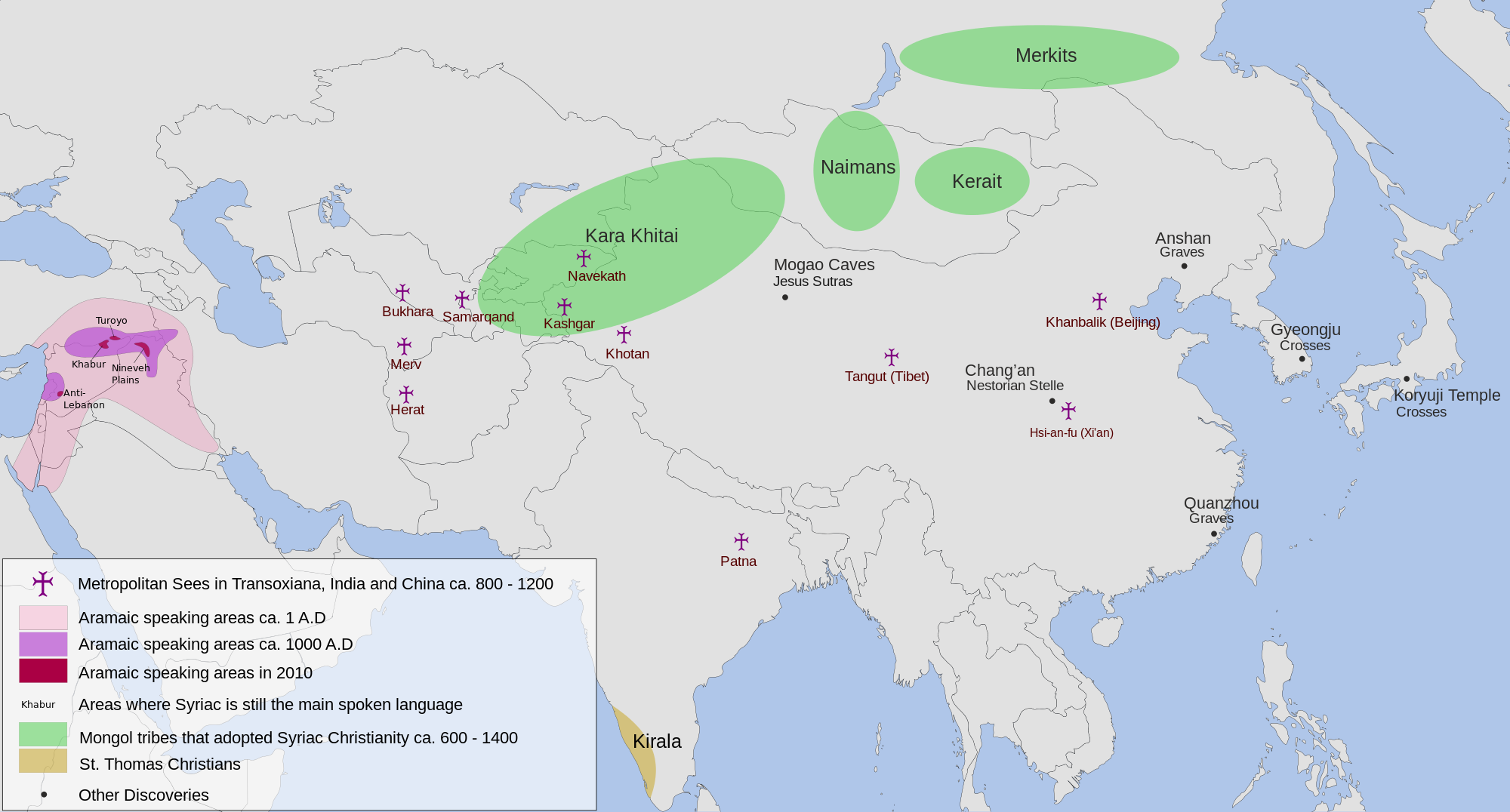
Verspreiding van het Assyrische christendom.
De Aramese identiteit in de late Oudheid
De overkoepelende Aramese identiteit werd in de loop der eeuwen steeds sterker. Terwijl vreemde overheersers als de Grieken, Romeinen, Parthen en Perzen kwamen en gingen, bleef de Aramees sprekende autochtone bevolking zich op cultureel gebied onderscheiden. Gedurende de eerste eeuwen van onze jaartelling kreeg het christendom onder de Arameeërs veel aanhangers. De Arameeërs ontwikkelden een unieke oosterse vorm van het christendom en konden zich daardoor moeilijk vinden in de door Rome opgelegde chalcedoonseorthodoxie. Sindsdien volgen Aramees sprekende christenen veelal ofwel de nestoriaanse of de monofysische leer. De christelijke Aramese identiteit bleef ook na de komst van de islam een belangrijke rol spelen op het wereldtoneel. Lange tijd was de nestoriaanse kerk de grootste christelijke stroming ter wereld, met volgelingen tot in China. Pas met de massamoorden van Timoer Lenk rond 1400 werden de Aramese christenen gereduceerd tot een gemarginaliseerde minderheid.



![Plattegrond van een Parthische tempel in Ashur. Door Udimu (naar: Colledge, The Parthians, 126, fig. 32 (c)) [GFDL (http://www.gnu.org/copyleft/fdl.html), CC-BY-SA-3.0 (http://creativecommons.org/licenses/by-sa/3.0/) or CC BY 2.5 (http://creativecommons.org/licenses/by/2.5)], via Wikimedia Commons.](http://sargasso.nl/wp-content/uploads/2016/10/Assur_temple-231x300.jpg)