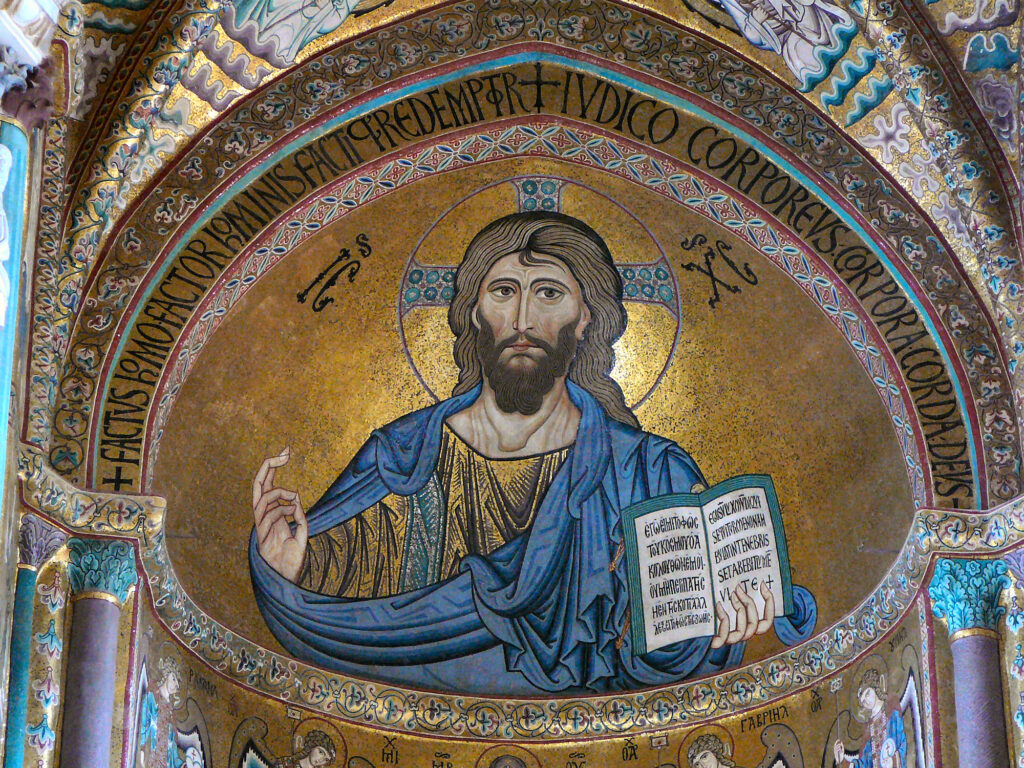
Psalm 2 occupies a peculiar place in Jewish and Christian tradition. It is one of the classic Messianic psalms: in Judaism often read as a prophecy of the coming anointed king, and in Christianity reinterpreted as a vision of Christ’s ultimate victory at the Second Coming. Its language is confident, absolute, and unapologetically violent. Kings are smashed, rebels annihilated, and divine laughter rings out over futile resistance.
That tone sits uneasily with the image of Christ many modern readers prefer: gentle, pacifist, turning the other cheek. Psalm 2 offers no such comfort. It is triumphalist, confrontational, and steeped in the logic of domination. Precisely for that reason, it has often been spiritualized, allegorized, or pushed toward the edges of liturgical attention.
I first became acutely aware of this tension during my university years. I was sitting in the Royal Concertgebouw in Amsterdam, listening to Händel’s Messiah, while at the same time studying the ancient Near East and the ideology of kingship and empire. When the baritone began to sing “Why do the nations so furiously rage together?”, I was supposed to hear biblical prophecy set to magnificent music. Instead, something else leapt out at me immediately.
It sounded oddly Assyrian.
The impression was instant. As the music unfolded, the choir hurling out “Let us break their bonds asunder,” and later the tenor proclaiming “Thou shalt break them with a rod of iron”, I could not shake the feeling that Psalm 2 was not merely religious poetry. It was speaking the language of empire.
In what follows, I want to explain why Psalm 2 sounds so “Assyrian,” line by line, and to suggest — carefully, but deliberately — that it may have been composed as a theological response to Neo-Assyrian royal propaganda.
“Why do the nations rage?”
The psalm opens with an image that would have been instantly recognizable in the seventh century BCE:
Why do the heathen rage,
and the people imagine a vain thing?
The kings of the earth set themselves,
and the rulers take counsel together… (Ps. 2:1–2, KJV)
This is classic rebellion language. In Neo-Assyrian royal inscriptions, foreign kings are constantly accused of “plotting,” “conspiring,” and “taking counsel together.” Coalition-building among vassals is presented not as diplomacy, but as criminal delusion. Rebellion is never justified. It is irrational by definition.
Psalm 2 adopts this same framing. The nations are not seeking justice or independence. They “rage” and “imagine a vain thing.” The verdict is already implicit: resistance is pointless.
“Let us break their bands asunder”
Let us break their bands asunder,
and cast away their cords from us. (Ps. 2:3)
Here the psalm gives voice to the rebels themselves, and in Händel’s setting, it is telling that these words are hurled out by the chorus.
The imagery itself is unmistakably imperial. In Assyrian texts, submission to the great king is routinely described as bearing a yoke. To rebel is to “throw off the yoke of Aššur”, This is not neutral language. The yoke represents divinely sanctioned order, rejecting it is cosmic disorder.
Psalm 2 places exactly this rhetoric in the mouths of the nations. But it does so to discredit them. Their desire for autonomy is framed as rebellion not merely against a king, but against the divine order itself.
Divine laughter and imperial contempt
He that sitteth in the heavens shall laugh:
the Lord shall have them in derision. (Ps. 2:4)
This is one of the psalm’s most unsettling lines, and one of its most imperial.
Neo-Assyrian kings regularly portray their enemies as laughable. Rebellion is not tragic, it is absurd. The gods already know how it will end. In royal inscriptions, this contempt is often explicit: the enemy king is foolish, deluded, already defeated.
Psalm 2 relocates this scorn from the Assyrian palace to the heavenly throne room. It is not Sennacherib who laughs, but YHWH himself. The effect is the same: the imbalance of power is so great that resistance becomes ridiculous.
“Yet have I set my king”
Yet have I set my king
upon my holy hill of Zion. (Ps. 2:6)
This is pure royal investiture ideology. Kings do not rule because they are popular or powerful, they rule because the god has installed them. Assyrian kings emphasize this relentlessly. Their authority is not negotiated, it is bestowed.
Psalm 2 uses the same logic, but with a striking shift. The center of the world is no longer Assur or Nineveh, but Zion. The king is not the agent of Assyrian expansion, but the anointed of YHWH.
This is not a rejection of imperial logic. It is a reassignment of legitimacy.
“Thou art my Son”
Thou art my Son;
this day have I begotten thee. (Ps. 2:7)
To modern ears, this sounds theological. In its ancient context, it is political.
Across the ancient Near East, kings are called the “sons” of gods—not biologically, but by adoption. Sonship expresses authority, protection, and inheritance. It marks the king as the earthly representative of divine will.
Psalm 2 places Israel’s king squarely within this tradition. He stands in the same ideological space as the great kings of Mesopotamia, but his divine patron is different, and so is the geography of power.
Iron rods and broken pottery
Thou shalt break them with a rod of iron;
thou shalt dash them in pieces like a potter’s vessel. (Ps. 2:9)
In Messiah, these words are delivered not by the chorus, but by a tenor soloist, with chilling certainty.
The imagery is not generic violence. In Assyrian ideology, rebels are smashed, pulverized, reduced to debris. Broken pottery is a common image for total, irreversible destruction, an object that has outlived its usefulness. Iron, meanwhile, signifies technological and military superiority: unbending, unstoppable, final.
This is the language of deterrence. Submit, or be annihilated. Psalm 2 does not soften this logic. It embraces it and again assigns it to YHWH’s anointed rather than to an imperial conqueror.
A response to Assyrian propaganda?
So was Psalm 2 written as a response to Neo-Assyrian royal ideology?
We should be cautious. The psalm is difficult to date precisely, and many of its motifs belong to a broader ancient Near Eastern repertoire. Yet the density and clustering of specifically Assyrian-style elements — rebellion rhetoric, divine laughter, iron rule, smashed pottery, installed kingship — are hard to ignore.
At the very least, Psalm 2 was composed in a world saturated with Assyrian political theology. And more than that: it seems to speak back to it.
Rather than rejecting imperial language, the psalm appropriates it. It accepts the Assyrian premise that the world has a single center of power, that rebellion is futile, that sovereignty is divinely sanctioned. But it denies Assyria the right to define where that power resides.
Empires rage. YHWH laughs.
Why this still resonates
Psalm 2 is not a gentle text. It is not a retreat into private spirituality. It is a bold, confrontational claim about power in a world dominated by empire.
Perhaps that is why Händel’s setting still carries such an unsettling force. The alternation of soloists and chorus — baritone, choir, tenor — does not soften the psalm, it dramatizes its imperial logic. The rage of the nations, the mockery of rebellion, the certainty of judgment are all still there.
Below, I’ve embedded a performance of “Why do the nations rage” from Messiah. Listen to it with Psalm 2 in mind. Not as a timeless abstraction, but as a hymn forged in the age of Assyrian empire, daring to claim that even the greatest power on earth stood under judgment.