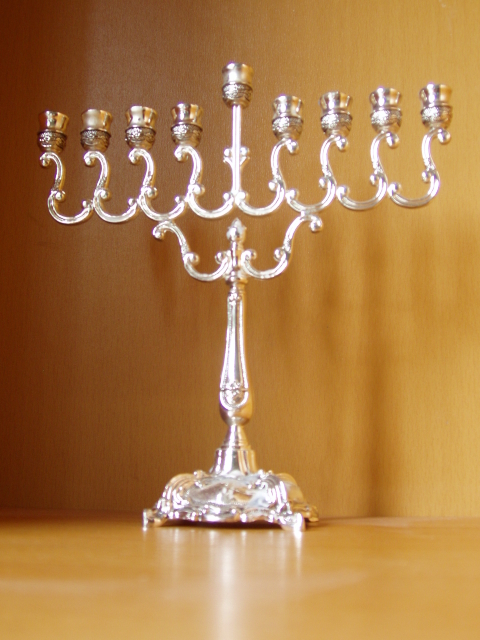
Every winter, Hanukkah is celebrated as a story of resilience. A small religious community, threatened by persecution, refuses to abandon its faith. An empire tries to suppress Jewish law and worship, a priestly family rises in revolt, the Temple is reclaimed and rededicated. A single day’s worth of lamp oil burns for eight. Light triumphs over darkness.
It is a powerful story, and not an untrue one. But historically speaking, the reality behind the Maccabean Revolt was more complex — and more unsettling — than a simple tale of good versus evil. What unfolded in the 2nd century BCE was not just a clash between Judaism and foreign oppression, but a crisis produced by cultural globalization, internal division, and imperial interference in the very heart of Jewish religious life.
Hellenism as a cosmopolitan challenge
After the conquests of Alexander the Great, the eastern Mediterranean was reshaped by a shared Hellenistic culture. Greek became the language of prestige, cities adopted Greek institutions, and education, athletics, and civic life were reorganized along cosmopolitan lines. Participation in this culture brought real advantages, especially to urban elites.
For many Jews, Hellenism was not inherently hostile. Greek names, Greek education, and engagement with the wider Mediterranean world promised opportunity and status. Yet this openness also put pressure on practices that defined Jewish distinctiveness: circumcision, Sabbath observance, dietary laws, and exclusive loyalty to the God of Israel.
As historians such as Erich Gruen have stressed, Hellenism was not simply imposed. It was adopted, negotiated, and contested. The central question dividing Jewish society was not whether to survive, but how far accommodation could go without dissolving the foundations of Jewish identity.
Power, money, and the Temple
These tensions crystallized around the Jerusalem Temple. Under the Seleucid king Antiochus IV Epiphanes (r. 175-164 BCE), the high priesthood became entangled with imperial politics. Jason, and later Menelaus, two Hellenized Jews, obtained the office through royal patronage and financial promises, rather than uncontested priestly legitimacy.
This was not unusual in the ancient world. A Babylonian Astronomical Diary from the Seleucid period (-168A, r 12′-20′) records how the same Antiochus appointed a temple financial official by royal decree and redistributed sacred gold under state supervision. Temples were not only religious centers, but economic institutions embedded in imperial systems.
In Jerusalem, however, this politicization struck at the Temple’s symbolic core. When the high priest appeared as a royal client rather than a guardian of the cult, confidence in the sanctuary itself began to erode. What followed was not merely administrative reform, but a crisis of legitimacy.
The “abomination of desolation”
The breaking point came in 167 BCE. According to 1 Maccabees, Antiochus issued decrees restricting traditional Jewish practices and intervened directly in the Temple cult. The Book of Daniel describes the result as the “abomination of desolation”: a cultic outrage so severe that it rendered the sanctuary unfit for Israel’s God.
What did this mean in practice?
1 Maccabees reports that a foreign installation was placed “upon the altar”, widely understood as the construction of a pagan altar on top of the Temple altar. 2 Maccabees is more explicit: the Temple is described as being dedicated to Zeus Olympios. Later Jewish historiography, especially Josephus, adds a detail that would become central to later memory: swine were sacrificed on the altar.
Whether Antiochus himself personally ordered a pig sacrifice, or whether this detail reflects later rhetorical sharpening, remains debated. But the symbolic meaning is unmistakable. A Zeus cult in the Temple — and especially the slaughter of pigs, animals ritually impure in Jewish law — represented the ultimate inversion of sacred order. This was not simply religious interference. It was experienced as desecration.
Persecution: policy or polemic?
Ancient sources describe a wave of persecution: bans on circumcision and Sabbath observance, executions, and martyrdom. Yet modern historians are divided over how systematic these measures were.
Elias Bickerman famously argued that Antiochus crossed an unprecedented line by coercively suppressing core Jewish practices. More recent scholars have adopted a more cautious stance. John J. Collins and Lester L. Grabbe emphasize how heavily our reconstruction depends on a small number of ideologically charged sources and warn against assuming that the measures described there were systematic, uniform, or applied beyond Judea itself. Shaye J. D. Cohen has further cautioned against interpreting these events through modern categories such as “religion” and “persecution,” while Seth Schwartz has pushed this skepticism further still, questioning whether the Seleucid response constituted a coherent persecution policy at all and suggesting that later Jewish memory may have sharpened and universalized the language of oppression.
What is clear is that symbolic violence against the Temple, whether deliberate or not, proved explosive in a deeply divided society. Intent mattered less than impact.
Repression in a moment of imperial crisis
Any attempt to understand Antiochus’ actions in Judea must take into account the wider political context in which they occurred. The repression of Jewish practices did not take place at a moment of imperial confidence, but at a time of acute strain for the Seleucid monarchy.
In 168 BCE, Antiochus had launched a major campaign against Ptolemaic Egypt, aiming to bring the wealthy Nile Valley under Seleucid control. Militarily, the campaign was initially successful. Politically, it ended in humiliation. At Eleusis, Antiochus was confronted by a Roman envoy, Gaius Popillius Laenas, who delivered a blunt ultimatum: Antiochus was to cease hostilities immediately and withdraw all Seleucid forces from Egypt and Cyprus. When the king asked for time to consult his advisers, Popillius famously drew a circle around him in the sand and demanded an answer before he stepped out of it. Antiochus complied and withdrew. The episode made brutally clear that Seleucid ambitions were now constrained by Roman power.
The repercussions were immediate. The failed Egyptian venture strained royal finances, damaged Antiochus’ prestige, and heightened the need for internal stability and reliable revenue streams. Judea — strategically located, fiscally valuable, and already riven by internal conflict — was precisely the kind of region where imperial authority might be asserted more forcefully.
Seen in this light, Antiochus’ intervention in Jerusalem looks less like ideological religious zeal and more like crisis governance. Control over the Temple meant control over wealth, loyalty, and symbolic order. Measures that violated Jewish religious norms may have appeared, from a Hellenistic ruler’s perspective, as pragmatic steps to impose unity, discipline, and obedience in a volatile province.
This does not make the repression any less real, nor the desecration any less traumatic. But it does help explain why such drastic measures were taken at this particular moment. As several historians have noted, Antiochus did not pursue comparable policies against Jewish communities elsewhere in his empire. Judea was treated as an exceptional problem. One exacerbated by factional strife, fiscal pressure, and the king’s own weakened position after the Egyptian debacle.
Understanding Antiochus’ motivations in this way does not absolve him. It does, however, shift the emphasis from religious hatred to imperial vulnerability. The repression of Jewish practices emerges not as the confident assertion of a universal ideology, but as a risky attempt to reassert control at a moment when Seleucid power itself was under threat.
Revolt and rededication
Resistance began not in Jerusalem, but in the countryside. When the priest Mattathias ben Yohanan killed a royal official enforcing the decrees and fled to the hills, he ignited a revolt that soon passed to his son Judas Maccabaeus. Through guerrilla warfare, the rebels gradually gained the upper hand.
In 164 BCE, they captured Jerusalem and purified the Temple. The polluted altar was dismantled, a new one built, and proper sacrifices resumed. This rededication (ḥanukkah) of the Temple is the historical core of the festival.
The most famous element of the Hanukkah story, however, comes from a later layer of tradition. In the Babylonian Talmud (Shabbat 21b), the sages recount that when the Temple was reclaimed, the priests found only one sealed cruse of ritually pure olive oil, enough to light the menorah for one day. They lit it anyway and the oil burned for eight days, until new oil could be prepared.
This miracle does not appear in 1 or 2 Maccabees. As scholars such as Seth Schwartz have observed, the shift from celebrating military victory to emphasizing a divine miracle reflects later rabbinic priorities. By focusing on light, purity, and divine intervention, Hanukkah could be celebrated without glorifying Hasmonean violence or kingship.
Consolidation through crisis
The Maccabean Revolt did more than restore a sanctuary. It reshaped Judaism itself. Practices that had once been negotiable became non-negotiable. The boundaries of the community were drawn more sharply. Law, ritual, and collective memory were bound together in new ways.
Paradoxically, imperial pressure and internal conflict helped transform Judaism into a more clearly defined religious system. Crisis forced definition. As Daniel Boyarin has argued more broadly, religious identities often solidify not in times of stability, but in moments of fracture.
Hanukkah, then, is not only a story of resistance to oppression. It is also a reminder that traditions are forged through debate, conflict, and adaptation. The lights commemorate the restoration of sacred space, but they also illuminate a society grappling with cultural globalization, political power, and the costs of accommodation.
Seen this way, Hanukkah remains profoundly relevant. Not because it tells a simple story, but because it preserves the memory of a difficult one.
Interessant om de context zo duidelijk te lezen!